

Tauranga
New Zealand’s Pearl: History, Present, and Interesting Facts
Tauranga is one of New Zealand’s fastest-growing and most attractive cities, located in the Bay of Plenty region of the North Island. This city is renowned not only for its stunning natural surroundings and mild climate, but also for its rich history, cultural heritage, and dynamic development. In this guide, we will explore the most interesting facts, history, current status, and population of Tauranga to help visitors better understand and appreciate this amazing corner of New Zealand.
Geographical location and climate
Tauranga is located on the east coast of the North Island, on the Bay of Plenty, surrounded by picturesque mountains and beaches. Its location gives the town a moderately warm maritime climate with mild winters and warm summers, making it an ideal place to relax and live. Average annual temperatures range from 10°C in winter to 24°C in summer.
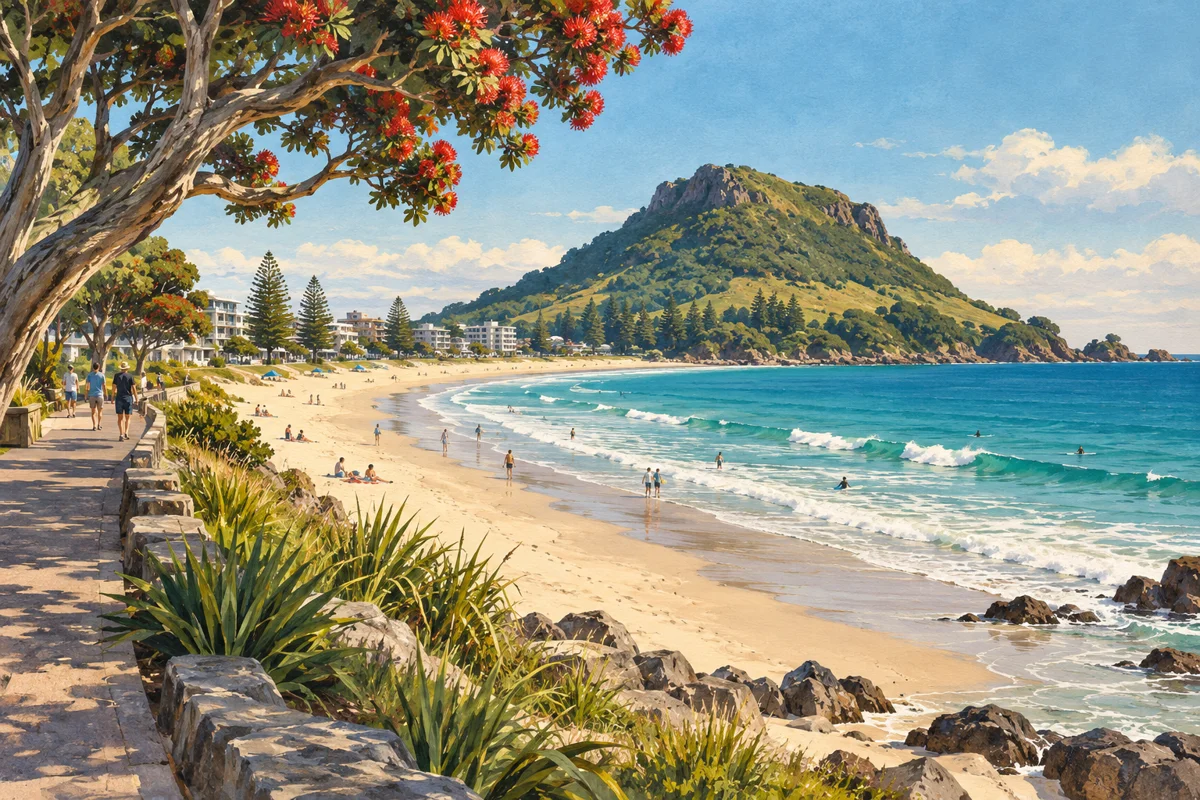
Thanks to its proximity to the sea, residents and tourists can enjoy a variety of water sports, from swimming and surfing to fishing and yachting. Numerous parks and beaches are located along the coast, with Mount Maunganui and Papamoa beaches being particularly popular.
History of the city of Tauranga
Tauranga’s history dates back to the first Polynesian settlers who arrived in the region around 1,000 years ago. The Māori, New Zealand’s indigenous people, lived in this area for a long time, utilizing its natural resources for sustenance and developing their cultural traditions.
The word “Tauranga” means “anchorage” in Māori, reflecting the bay’s importance as a mooring point for Māori canoes and boats. The area was strategically important due to its convenient port and proximity to fertile land.
In the 19th century, European settlers arrived here. The port of Tauranga became an important hub for the export of agricultural products, timber, and fish. In the 20th century, the city gradually transformed into a modern centre of trade and tourism.
Population and culture
Tauranga is a rapidly growing city with a population of approximately 160,000 (as of 2023), and its population continues to grow thanks to an influx of migrants and internal migration. It is one of the fastest-growing cities in New Zealand.
The city is highly multicultural, with representatives of various ethnic groups living here, including descendants of Māori, Europeans (the original settlers), and people of Asian and Pacific Island descent. Locals are proud of their cultural heritage, which is widely represented in museums, cultural centres, and events.
Māori play a special role in the city’s life. Tauranga is home to important iwi —traditional settlements and cultural centres. Tours and programmes are available for tourists to explore Māori culture and history, as well as their art, dance, and crafts.
Modern Tauranga
Today, Tauranga is a modern and dynamically developing city, combining natural beauty with developed infrastructure and a high standard of living.
Economy
- Port and logistics: The Port of Tauranga is one of the largest and busiest in New Zealand.
- Agriculture: Production of kiwi, avocado, apples and other fruits.
- Tourism: Year-round tourist flow due to the climate and attractions.
- Services and construction: Development of residential and commercial real estate.
Tourist attractions
- Mount Maunganui: Volcano, beaches, trekking and resort atmosphere.
- McLeod Museum: Cultural and natural history of the region.
- Harbour Drive: A coastal area for recreation and walking.
- Hiking trails: Trails through forests, to waterfalls and along the coast.
Interesting facts about Tauranga
- One of the fastest growing cities in the country.
- A modern and upgraded port since 2006.
- Popular with families due to its schools and climate.
- Environmental projects and sustainable tourism are developing.
Practical information for tourists
- Getting there: 3 hours from Auckland, 2 hours from Rotorua. There is a domestic airport.
- When to go: October–April is the best time. Winter is mild, but rain is possible.
- What to bring: Comfortable shoes, swimwear, sunscreen.
- Where to stay: From hostels to hotels and apartments in Tauranga and Mount Maunganui.
Conclusion
Tauranga is a dynamically developing town with a rich history, beautiful nature, and a welcoming atmosphere. It’s the perfect destination for those looking to combine a beach holiday with active tourism and cultural immersion in Māori traditions.
Its convenient location, wonderful climate, and diverse entertainment options make Tauranga one of the most attractive tourist destinations in New Zealand. If you’re planning a trip to the North Island, be sure to include Tauranga on your itinerary—this city will leave you with a wealth of memorable experiences and fond memories!
Illustrations show the character of the places and are not documentary photographs. Opening hours, admission prices and access conditions can change; check the attraction’s official information before booking.
Plan your visit: Tauranga
How to fit it into your itinerary
Combine central Tauranga and Mount Maunganui, with separate time for a Mauao walk.
How much time to allow
Half a day or a day; allow separately for a Mauao walk.
Before you travel
Check track openings, Mauao restrictions, weather and parking.
Official information
- Official website: places, tickets and visitor information
- DOC: access restrictions and alerts
- NZTA: roads and journey times
Times are suggested planning allowances, not guaranteed trip durations. Add driving time, stops and a weather buffer separately. Check current tickets, opening hours and access with the operator; attraction tickets are arranged separately from the driver service.