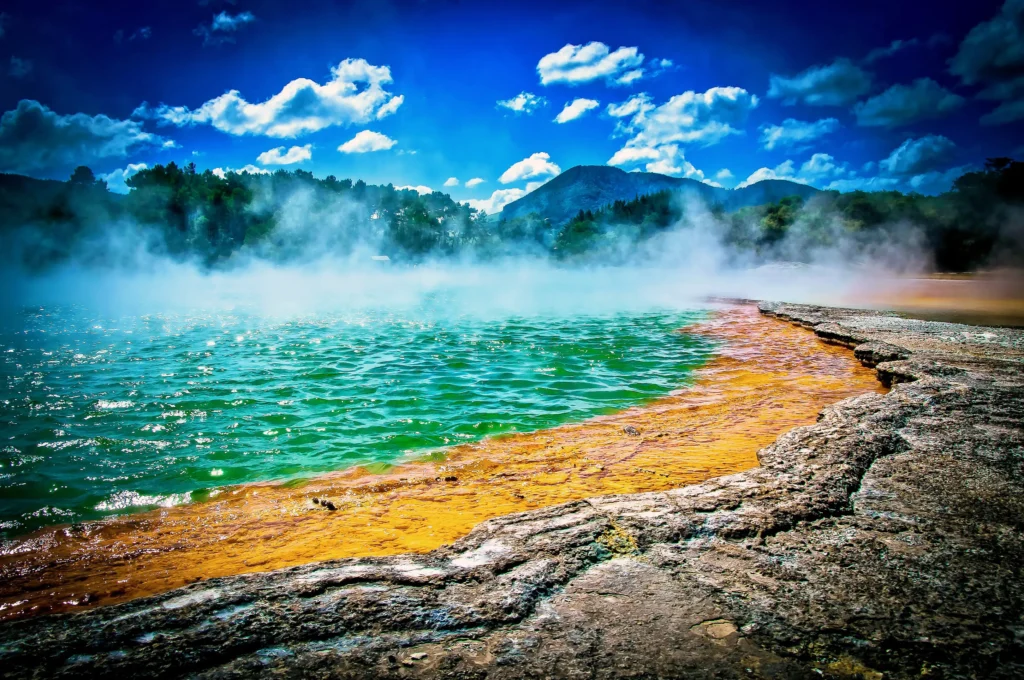


Rotorua and the surrounding area are the heart of New Zealand’s geothermal and cultural heritage.
Rotorua is one of New Zealand’s most unique and popular cities, located in the Bay of Plenty region of the North Island. This city is renowned for its geothermal springs, active volcanic activity, rich Māori culture, and stunning natural beauty. Within a 50-kilometer radius of Rotorua, there are numerous interesting places worth visiting for every tourist. In this guide, we’ll explore the history, current status, population, and main attractions of Rotorua and the surrounding area, as well as share interesting facts and travel tips.
Geographical location and climate
Rotorua is located in the central part of New Zealand’s North Island, on the shores of Lake Rotorua, one of the largest and most picturesque lakes in the country. The city is located in a zone of active volcanic activity, in a region rich in geysers, hot springs, mud volcanoes, and other geothermal phenomena.
Rotorua has a temperate maritime climate, with mild winters and warm summers. Average winter temperatures range from 7 to 12°C, while summer temperatures range from 20 to 25°C. Due to its proximity to the lake and geothermal activity, the air is often saturated with a slight sulphurous scent, a characteristic feature of the region.
History of Rotorua
Rotorua’s history is rooted in the traditions of the Māori, New Zealand’s indigenous people. The name “Rotorua” in Māori means “second lake,” reflecting the region’s several large lakes, with Lake Rotorua being the second largest after Lake Taupo.
The Māori settled this region several hundred years ago, exploiting its unique natural resources—hot springs for cooking, as well as the healing properties of its geothermal waters. Rotorua was one of the most important centres of Māori culture and intertribal gatherings.
In the 19th century, European settlers arrived, and the city began to develop rapidly. The 1886 eruption of Mount Tarawera dramatically changed the surrounding landscape. Today, visitors explore the region’s volcanic history and geothermal attractions, including Wai-O-Tapu.
Population and culture
Today, Rotorua has a population of approximately 65,000 (as of 2023). It is a multicultural city, where a significant portion of the population is of Māori descent—approximately 35%. The remaining residents are of European descent (Pākehā), Asians, and people from the Pacific Islands.
Rotorua is a cultural hub for Māori: home to several iwi (tribes) that actively support and develop their traditional culture and arts. The city hosts festivals celebrating traditional dance (haka), crafts, music, and Māori history.
A variety of cultural programmes are available to tourists, including visits to Māori villages (marae), workshops on making traditional handicrafts, performances by dance ensembles, and an introduction to Māori legends.
Rotorua’s top attractions
1. Wai-O-Tapu Geothermal Park
This park is one of the region’s main natural attractions. Here you can see multicolored hot springs, steaming mud pools, acid lakes, and the striking Champagne Pool and the Lady Knox Geyser.
Wai-O-Tapu Park amazes with its incredible diversity of colours: the presence of various minerals causes the spring water to be tinted in shades of yellow, green, orange, and red. Walking along the wooden boardwalks among these natural wonders is an unforgettable experience.
2. Te Puia Museum and Cultural Centre
Te Puia is a hub of Māori culture and natural wonders. It houses a traditional arts school, workshops, and a geothermal valley with geysers and hot springs. The park’s most famous geyser is Pohutu, which shoots columns of water up to 30 metres high.
Tourists can see traditional Māori dance performances, hear legends and stories, and learn about crafts, including wood carving and cloth making.
3. Lake Rotorua and the waterfront
Lake Rotorua is a wonderful place for strolls and relaxation. A convenient promenade with parks, cafes, shops, and sports fields stretches along the shore. Here you can rent a boat, go kayaking, snorkeling, or simply enjoy the views.
Along the waterfront are several attractions, such as a rose garden and a botanical garden. The lake hosts sailing regattas and various festivals.
4. Kuirau Park
This free geothermal park is located in the heart of Rotorua. Here you can explore bubbling mud pools and hot springs, as well as stroll along wooden paths among steaming cracks and hissing geysers.
The park boasts thermal baths for relaxation and relaxation. Locals and tourists alike love the place for its atmosphere and accessibility.
5. Redwoods Whakarewarewa Forest Reserve
This magnificent forest of towering redwoods is located just a few kilometres from the city centre. It offers numerous hiking and biking trails, including mountain bike trails.
The forest is popular with outdoor enthusiasts and nature lovers—a walk among the giant trees leaves an unforgettable impression.
Places to explore from Rotorua, including longer day trips
- Lake Taupo: The largest freshwater lake, excellent for fishing, sailing and swimming.
- Mount Tarawera and Waimangu Volcanic Valley: a geothermal landscape formed after the 1886 eruption.
- Lake Rotomahana: thermal springs and unique natural phenomena.
- Huka Falls: powerful water flows, equipped viewing platforms, a popular recreation area.
Cultural and entertainment events
- Mokai Urua Marae Festival: Traditional Māori Culture.
- Arts and Crafts Festival: craft exhibitions and workshops.
- International Hot Air Balloon Festival: a colourful show in the sky.
Interesting facts about Rotorua
- Rotorua is a city with active volcanic activity right within the city limits.
- The characteristic sulphur smell comes from geothermal activity. Stay on marked paths and follow all site safety instructions.
- The region is home to many rare species of plants and birds.
- Thermal pools are popular for relaxation; use designated bathing facilities and follow their guidance.
Practical tips for tourists
- Getting there: By plane, car or bus from Auckland.
- Best time: spring and autumn – comfortable, summer – hot, winter – mild.
- What to take: comfortable clothes, swimsuit, trekking shoes, camera.
- Where to stay: hotels, motels, hostels, campsites – for every taste and budget.
Conclusion
Rotorua is a stunning city offering tourists a unique blend of natural wonders, cultural heritage, and modern comforts. Geothermal springs, picturesque lakes, active volcanoes, and rich Māori culture make this one of the most vibrant and memorable destinations in New Zealand.
A trip to Rotorua and its surroundings will provide you with unforgettable experiences, revealing a new facet of nature and culture, and allowing you to truly experience the spirit of the land of long, white clouds. If you’re planning a trip to New Zealand, be sure to set aside a few days to explore this amazing region!
Illustrations show the character of the places and are not documentary photographs. Opening hours, admission prices and access conditions can change; check the attraction’s official information before booking. Wai-O-Tapu visitor information.
Plan your visit: Rotorua
How to fit it into your itinerary
Choose one main geothermal attraction and add the lake or a cultural programme. Te Puia and Wai-O-Tapu are separate venues with separate tickets.
How much time to allow
A full day for a focused itinerary; 1–2 nights for several attractions.
Before you travel
Check tour sessions, last admission, accessibility and cultural-programme terms. Stay on designated paths.
Official information
- Official website: places, tickets and visitor information
- DOC: access restrictions and alerts
- NZTA: roads and journey times
- Te Puia
- Wai-O-Tapu
Times are suggested planning allowances, not guaranteed trip durations. Add driving time, stops and a weather buffer separately. Check current tickets, opening hours and access with the operator; attraction tickets are arranged separately from the driver service.