

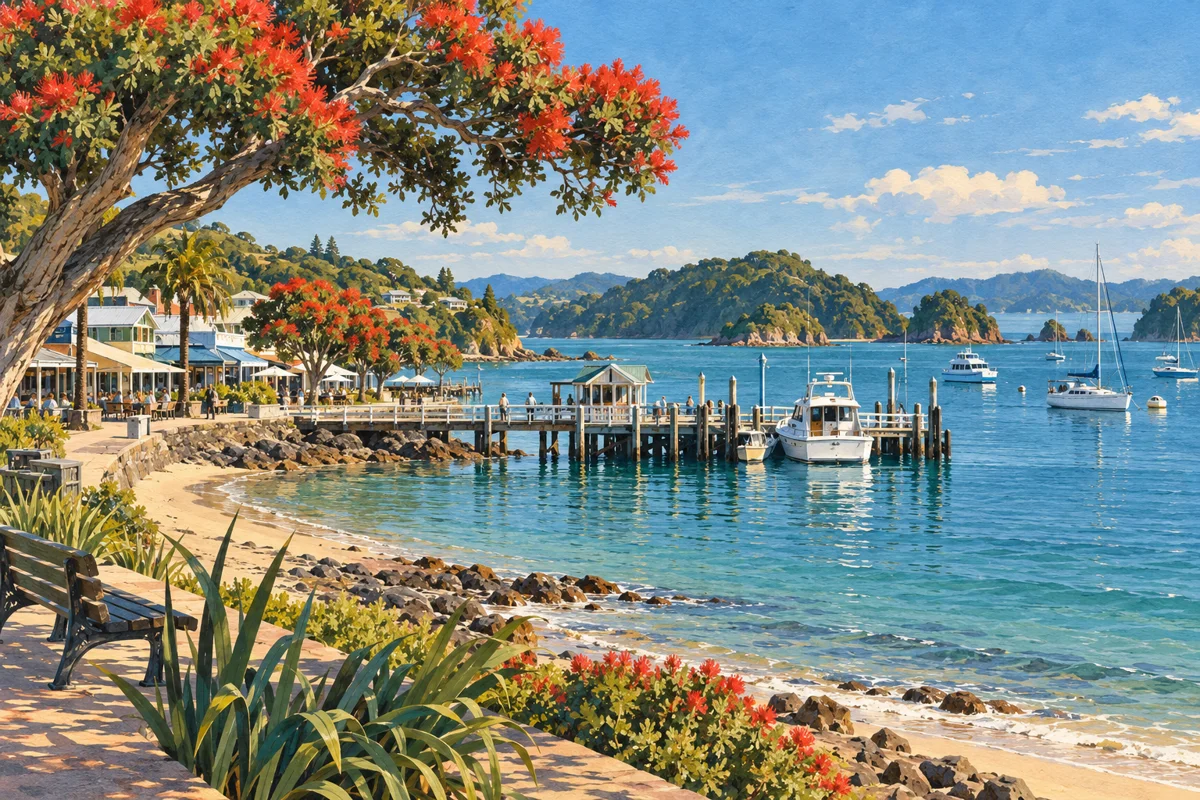
Paihia / Russell
Paihia is a small, picturesque town (settlement) on the coast of the Bay of Islands, located on New Zealand’s North Island, in the Northland region. It’s a welcoming and tranquil place, often called the “gateway” to the famous Bay of Islands, thanks to its convenient location, beautiful beaches, and vibrant tourist infrastructure (Northland Ferries, Bay of Islands Information).
Geographic location and accessibility
The city is approximately three hours’ drive north of Auckland and an hour’s drive from Whangārei via SH 11 (Northland Ferries, Wikipedia). SH 11 passes directly through Paihia, connecting it to strategically important historical and tourist sites in the region, including the famous Waitangi Treaty Grounds—the site of the signing of the Treaty of Waitangi in 1840 (Wikipedia, Te Ara Encyclopedia of New Zealand).
Demographics and population
According to the 2023 census, Paihia’s population is 1,623, an increase of 7.3% since 2018 and an increase of 25.8% since 2013 (Wikipedia).
- The median age of residents is 51 years (the national average is 38.1) (Wikipedia).
- Ethnic composition: 66.7% European (Pākehā), 35.1% Māori, 6.5% Pasifika, 7.9% Asian, with small proportions of other ethnic groups (Wikipedia).
- The median income is NZD 35,100, which is slightly below the national average of NZD 41,500 (Wikipedia).
These data create the image of a quiet, prosperous settlement with a significant Māori cultural environment and a older resident population.
History and cultural heritage
The arrival of missionaries and the printing press
In 1823, the Church Missionary Society established a mission in Paihia, becoming one of the first European missions in the region (Te Ara Encyclopedia of New Zealand, Northland Ferries). New Zealand’s first temple was built here, and the first printing press was installed (1835), later used to print the Māori Bible and copies of the 1840 Treaty of Waitangi (Northland Ferries, 1964 Mountain Culture Journal).
One legend has it that the name “Paihia” comes from the words of missionary Henry Williams: in Māori “pai” means “good”, and he supposedly said “pai here” (“it is good here”), which gave the village its name (Northland Ferries, Te Ara Encyclopedia of New Zealand).
From the mission to the tourist centre
After the mission’s closure in 1850, the settlement declined in importance. It only recovered in the 1930s, when the area became a popular holiday and fishing destination, thanks to the popularization of American writer Zane Grey, who promoted the region as a fishing paradise (Te Ara Encyclopedia of New Zealand, Northland Ferries). During World War II, American troops built a road from Kawakawa to Paihia, improving accessibility for tourists (Northland Ferries). By the 1960s, hotels, beach houses, and tourist lodges had opened in the area (Te Ara Encyclopedia of New Zealand).
Historical monuments
- St Paul’s Anglican Church, built in 1925, stands on the site of the old mission and is a memorial to the efforts of missionaries Henry and Williams (Te Ara Encyclopedia of New Zealand, Con Mochila).
- The Waitangi Grounds are a short drive from Paihia and occupy a central place in New Zealand history as the site of the signing of the Treaty of Waitangi, a key document that marked the beginning of the country’s colonial rule. Today, the site houses the Te Kōngahu Museum, a meeting house, a ceremonial canoe (waka), and other historical sites (Te Ara Encyclopedia of New Zealand, Con Mochila, Earth Trekkers).
Modern life and atmosphere
- Horotutu – Our Place is a newly created waterfront green space where residents and visitors gather for picnics and cultural events (Bay of Islands Information).
- The town won the Community of the Year award at the 2015 New Zealander of the Year Awards for its activity and hospitality (Bay of Islands Information).
- Marsden Road is a busy promenade lined with cafes, bars and souvenir shops; Williams Road offers services including a post office, pharmacy and bookshops (Bay of Islands Information).
Tourism and active recreation
Sea activities
- Departures from the pier include dolphin watching, fishing, kayaking, parasailing, and cruises to the famous natural arch “Hole in the Rock” (1964 Mountain Culture Journal, Bay of Islands Information, See and Do, NBB Travel).
- The Hole in the Rock cruise is a popular and iconic experience that allows you to sail through the arch on a calm day (NBB Travel, Base Backpackers).
Islands and walks
- Urupukapuka Island is the largest island in the bay, approximately 7 km from Paihia. It offers walking trails, beaches, cafes, and campsites, and tours with Hole in the Rock (Wikipedia) are regularly offered.
- Haruru Falls is a cascading waterfall 5 km from the city, nicknamed “the big noise” (Māori: Haruru), and is especially impressive after rainfall. It can be reached by foot along a scenic route through a mangrove forest (1964 Mountain Culture Journal, Con Mochila).
Land-based entertainment
- The Cape Brett Track is a long, 16-kilometer trek to the lighthouse, starting from the Rākaumangamanga Peninsula and suitable for experienced hikers. An overnight stay in the former lighthouse keeper’s house is available (1964 Mountain Culture Journal).
- Mountain biking at Waitangi MTB Park – over 50km of trails for all abilities just minutes from Paihia (NBB Travel).
Aerial and underwater experiences
- Salt Air’s helicopter tours offer flights over the bay, with the option to land at Hole in the Rock, or include walks with Māori guides (Earth Trekkers).
- Parasailing, skydiving, and tasting tours of the region’s wineries and breweries are a great addition to water adventures (See and Do, Base Backpackers, Earth Trekkers).
- For underwater enthusiasts, there are shipwreck dives, including the famous Rainbow Warrior and HMNZS Canterbury, which have been converted into artificial reefs that support marine life (NBB Travel, Base Backpackers).
Other activities and excursions
- Ferries to historic Russell, New Zealand’s first “capital,” with welcoming cafes and galleries (Base Backpackers, Stray Travel).
- A day at Cape Reinga, the country’s northernmost point where two oceans meet and the famous cape, complete with a drive along 90 Mile Beach and walks through ancient kauri forests (Base Backpackers, Stray Travel).
Paihia is much more than just a tourist destination. It’s a unique corner of New Zealand, where history blends with natural beauty and outdoor activities: from the depths of the bay to the ancient shores, from ancient stories to modern adventures. This town exudes a wonderful vibrancy and warmth—the perfect introduction to the culture, nature, and spirit of the country.
Russell – New Zealand’s first capital and the charm of the Bay of Islands
Russell is a small but truly historic town in northeastern New Zealand, in the Northland region, opposite the popular resort of Paihia, on the shores of the picturesque Bay of Islands. Despite its modest size, Russell is one of the country’s most significant and interesting settlements. It combines a rich colonial history, the unique atmosphere of a secluded seaside village, and modern tourist amenities.
Historical significance
Before the arrival of Europeans, this area was known to the Māori as Kororāreka. According to legend, a wounded Māori chief, after tasting the broth prepared by the Europeans, declared it “as sweet as penguin”—hence the name. By the early 19th century, a settlement of whalers, traders, and sailors had sprung up here. It quickly gained notoriety as the “hell port of the South Seas”—a place where drunkenness, prostitution, and violence were rampant.
Nevertheless, it was Russell that became the first de facto capital of New Zealand – the first residence of the British governor was located here and the most important document in the history of the country was signed here – the Treaty of Waitangi in 1840, not far from Russell, in the village of Waitangi.
New Zealand’s oldest church, Christ Church, built in 1835, is also located here. During New Zealand’s tribal wars, it was even shelled—bullet marks are still visible on its walls.
Modernity and atmosphere
Today, Russell is a quiet, picturesque resort town with a population of about 800. It has preserved its Victorian architecture, narrow streets, galleries, and the atmosphere of the last century. Unlike the more lively Paihia, Russell is preferred by those seeking peace, romance, and a leisurely getaway.
It’s easy to get here by ferry from Paihia (about 15 minutes), which is a small sea adventure in itself. From the water, you’ll enjoy magnificent views of the green hills and the bay, dotted with yachts and islets.
What to see and do
- Walking tours along the waterfront, city streets and hills offering panoramic views of the bay.
- Russell Museum, where you can learn more about the whaling past, Māori and European influences.
- Beaches – such as Long Beach, where you can swim, kayak and sunbathe.
- Boat trips into the Bay of Islands to spot dolphins, seabirds, and natural wonders like Hole in the Rock.
Why you should come
Russell is more than just a beautiful place. It’s an immersion into New Zealand’s past, a chance to touch the colonial era, learn about the relationship between the Māori and the British, and unwind and enjoy nature. For visitors interested in history and authentic places, Russell is a true treasure. It’s the perfect destination for a leisurely trip, a romantic weekend, or an introduction to the origins of Aotearoa—the land of the long white cloud.
Illustrations show the character of the places and are not documentary photographs. Opening hours, admission prices and access conditions can change; check the attraction’s official information before booking.
Plan your visit: Paihia and Russell
How to fit it into your itinerary
Use Paihia as a Bay of Islands base; include Russell using a ferry connection or a separately planned road route.
How much time to allow
Half a day for a short visit; 1–2 days with a cruise and heritage sites.
Before you travel
Check the last return ferry, marine weather and cruise check-in time.
Official information
- Official website: places, tickets and visitor information
- DOC: access restrictions and alerts
- NZTA: roads and journey times
Times are suggested planning allowances, not guaranteed trip durations. Add driving time, stops and a weather buffer separately. Check current tickets, opening hours and access with the operator; attraction tickets are arranged separately from the driver service.