

CABBIE.NZ TOP100 topics about New Zealand
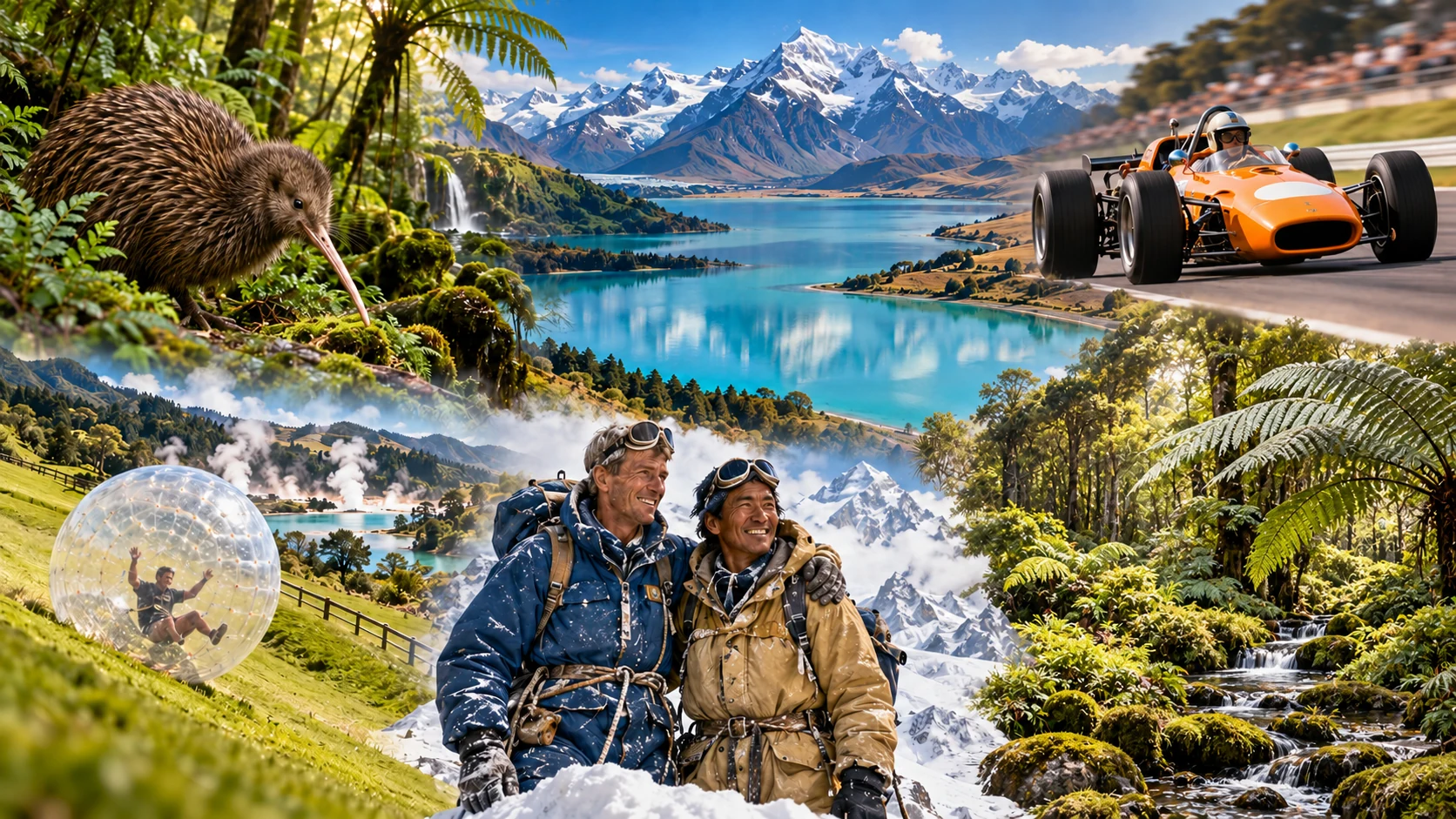
100 short stories about New Zealand’s nature, people, culture and achievements. The first 50 have illustrations; the next 50 have real photographs with author and licence credits. Every topic includes a source link.
Geography and nature
1. Zealandia: a mostly submerged continent
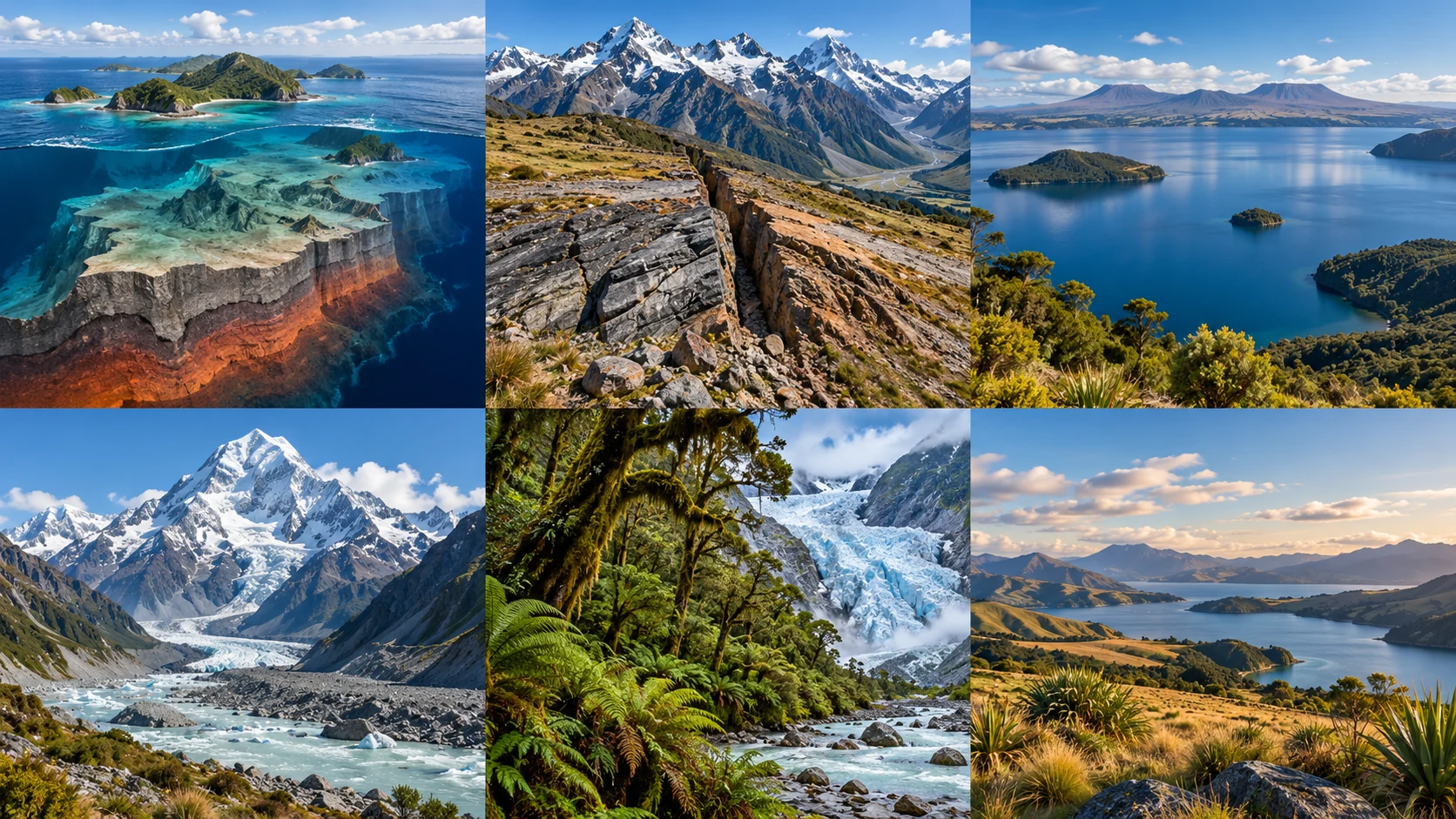
New Zealand is an above-water part of Zealandia. About 94% of this continent lies beneath the ocean; its boundaries extend far beyond the familiar outlines of the two main islands.
Source: GNS Science
2. On a tectonic plate boundary
The country straddles the Pacific and Australian plates. The Alpine Fault cuts through the South Island, and plate movement helps explain both its mountains and its earthquakes.
Source: Te Ara
3. Taupō: a lake and a volcano
The country’s largest lake occupies a volcanic caldera. Its tranquil surface conceals a history of powerful eruptions, making Taupō a geological landscape as well as a holiday destination.
Source: Te Ara
4. Aoraki: New Zealand’s highest mountain
Aoraki / Mount Cook is New Zealand’s highest mountain. Its national park brings together glaciers, rocky peaks and valleys, offering a view of the country’s alpine world without a summit climb.
Source: DOC
5. Glaciers beside temperate rainforest
Franz Josef and Fox glaciers descend from the Southern Alps into a temperate rainforest setting. This striking meeting of ice and dense greenery is a defining feature of the West Coast.
Source: UNESCO
6. Blue Lake’s exceptional clarity
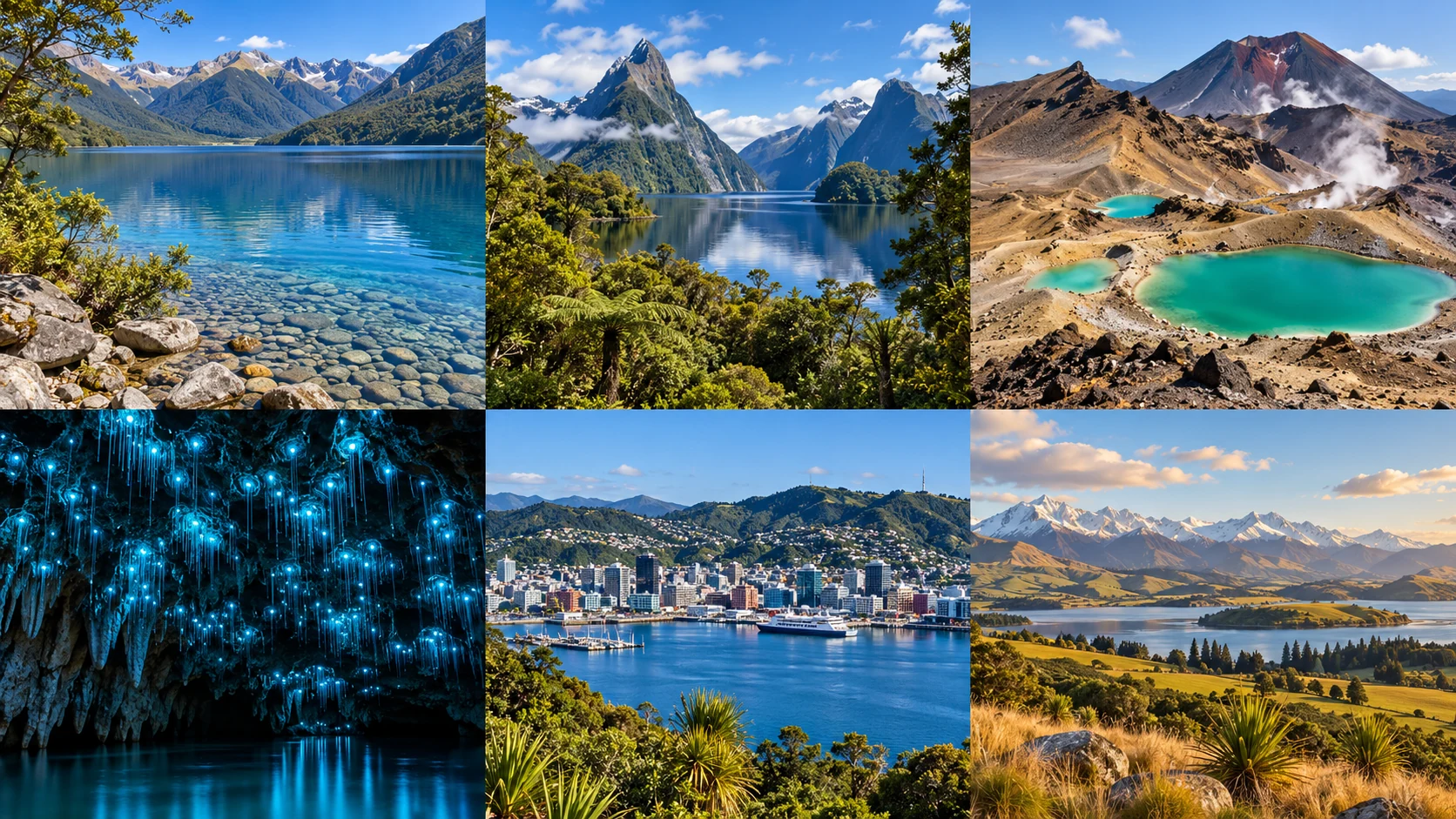
Rotomairewhenua / Blue Lake in Nelson Lakes has the clearest natural freshwater, according to NIWA research described by DOC. It is sacred to local iwi: visitors must keep themselves and their equipment out of the water.
Source: DOC
7. Four national parks in one World Heritage area
Te Wāhipounamu brings together Fiordland, Mount Aspiring, Aoraki / Mount Cook and Westland national parks. Its fiords, glacial valleys and ancient forests form one protected World Heritage landscape.
Source: UNESCO
8. Tongariro: nature and culture
In 1993 Tongariro became the first World Heritage property recognised under the revised cultural-landscape criteria. Its volcanic mountains have deep spiritual significance for Māori as well as geological importance.
Source: UNESCO
9. Glowworms are actually larvae
The star-like glow in caves comes from the larvae of the fungus gnat Arachnocampa luminosa. Their light attracts prey towards sticky threads: despite the name, glowworms are not ordinary worms.
Source: Te Ara
10. The southernmost national capital
Wellington is the southernmost capital of a sovereign state. It sits at the southern tip of the North Island beside Cook Strait, a location that helps explain its strong connection with the sea and wind.
Source: NASA Earth Observatory
Wildlife
11. Kiwi: a bird with an unusual bill
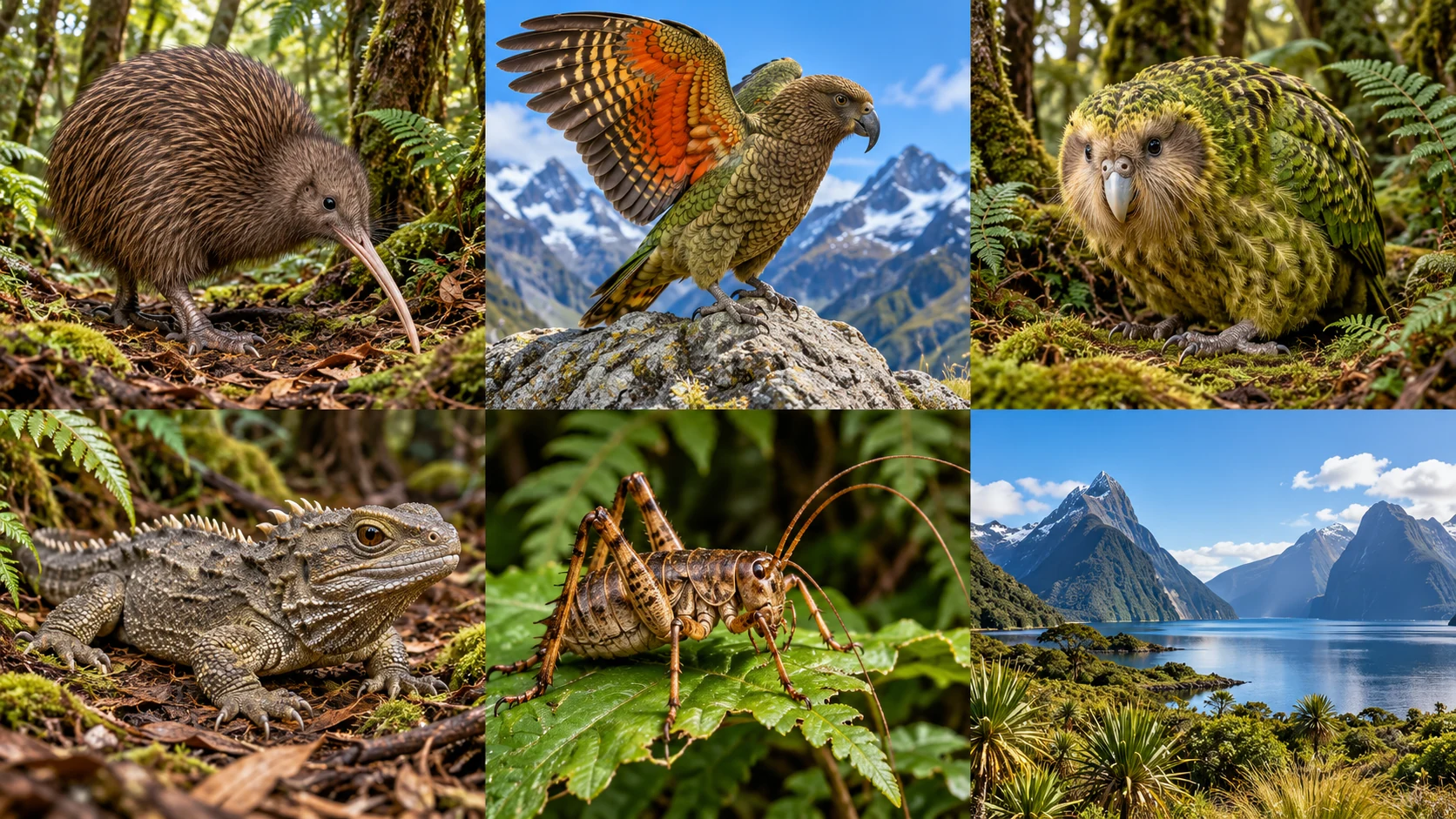
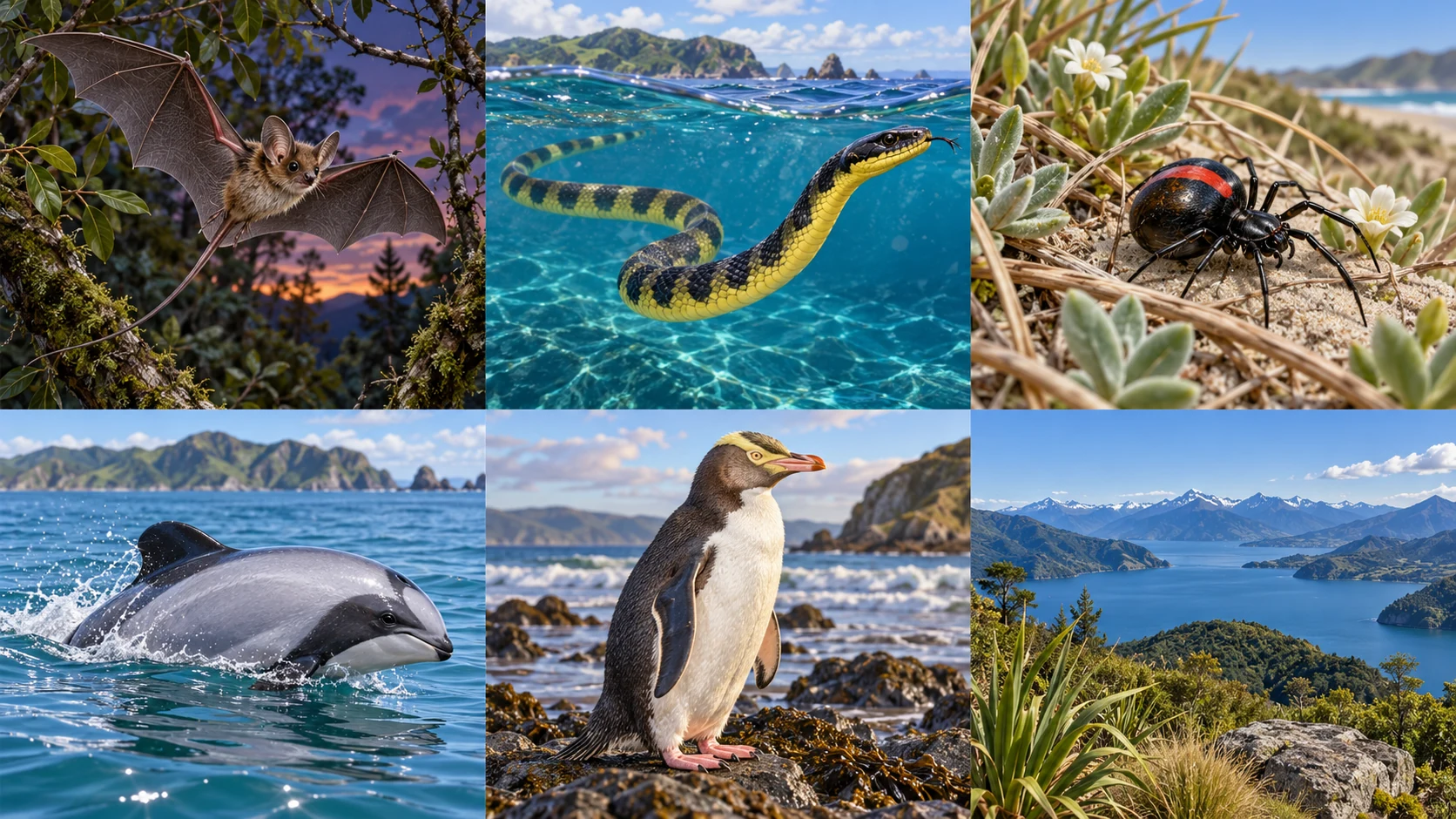
The flightless kiwi is recognisable by its long bill and hair-like feathers. Its nostrils sit near the bill’s tip, an unusual adaptation for finding food. It is one of the country’s best-known natural symbols.
Source: DOC
12. Kea: a curious mountain parrot
The South Island’s kea is famous for intelligence and curiosity, sometimes investigating and damaging car parts. Watch from a distance: feeding these parrots changes their behaviour and harms them.
Source: DOC
13. Kākāpō: a nocturnal flightless parrot
Kākāpō are heavy, flightless, nocturnal parrots. A dedicated conservation programme works to recover their population; seeing one is not an ordinary part of a tourist forest walk.
Source: DOC
14. Tuatara are not lizards
Although a tuatara looks like a lizard, it belongs to a separate ancient reptile lineage. New Zealand’s tuatara are the only living representatives of the order Rhynchocephalia.
Source: DOC
15. Wētā: giants of the insect world
Wētā are a group of New Zealand insects rather than a single species. Giant wētā include some of the heaviest insects, and many species need protection from introduced predators.
Source: DOC
16. The only native land mammals
Bats are New Zealand’s only native land mammals. This does not mean the country has no other native mammals: its coastal waters also support marine species.
Source: DOC
17. No native land snakes, with a qualification
New Zealand has no native land snakes. However, sea snakes and kraits occasionally reach its shores, so saying that snakes never occur here is too absolute.
Source: DOC
18. Katipō: an exception to the no-venom myth
Katipō is a native venomous spider associated with coastal habitats. The popular claim that New Zealand has no venomous animals is therefore incorrect, even though encounters are uncommon.
Source: Te Papa
19. Hector’s dolphin: small and endemic
Hector’s dolphin is a small dolphin endemic to New Zealand. Its rounded dorsal fin is distinctive, and protecting coastal habitats is important for its survival.
Source: DOC
20. Hoiho: the yellow-eyed penguin
Hoiho has yellow eyes and a pale yellow band around its head. It is a vulnerable bird; when watching, do not block its route between the sea and its nesting area.
Source: DOC
History and culture
21. Women’s voting rights in 1893
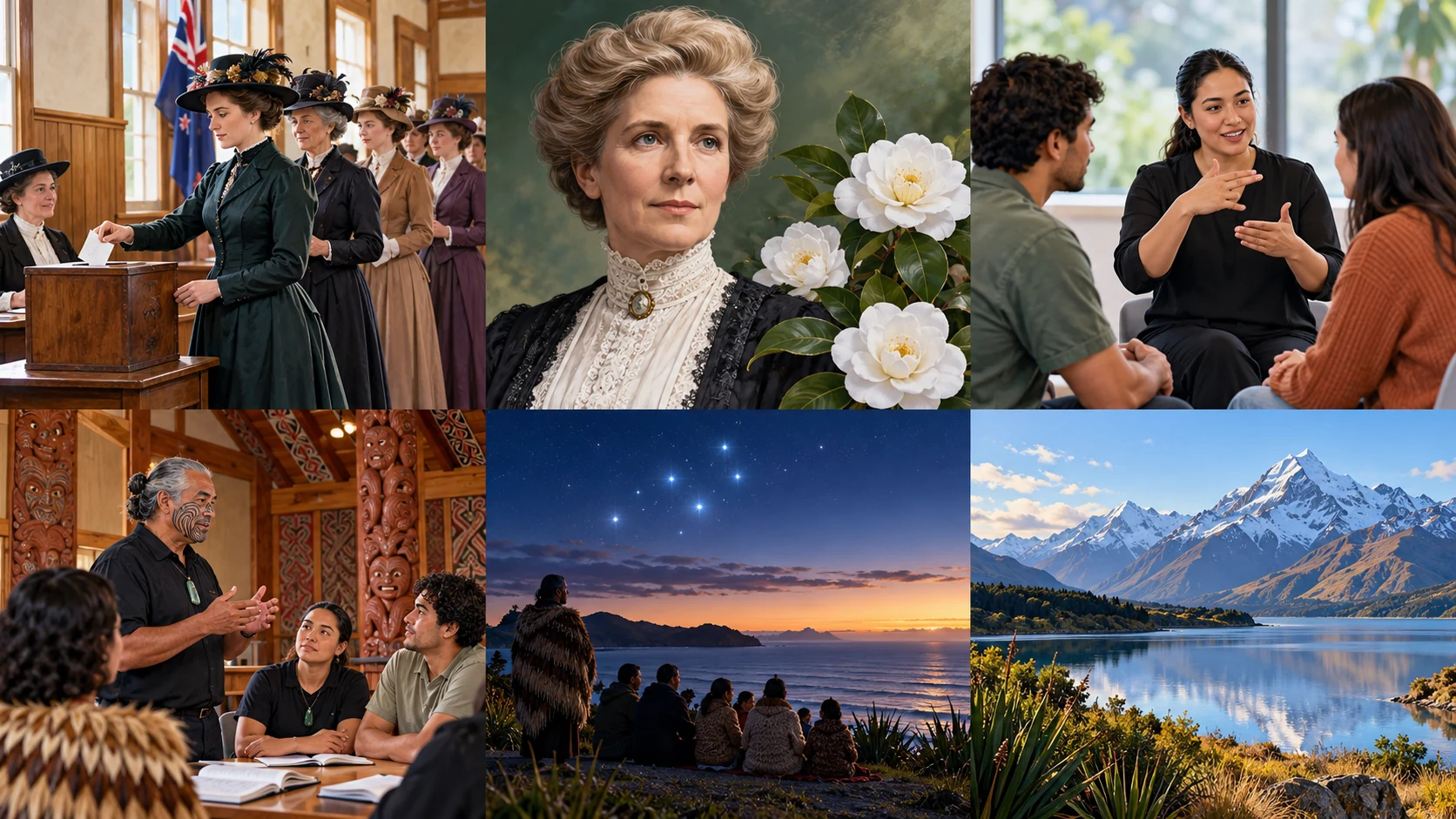
In 1893 New Zealand became the first self-governing country where women could vote in parliamentary elections. This milestone should not be confused with the later right to stand for Parliament.
Source: NZ History
22. Kate Sheppard on the ten-dollar note
Suffrage campaign leader Kate Sheppard appears on New Zealand’s $10 banknote. The note commemorates a civic movement that changed the country’s history.
Source: Reserve Bank of New Zealand
23. Sign language has official status
New Zealand Sign Language gained official status under the 2006 Act. It is the language of the Deaf community, rather than simply a set of gestures reproducing English words.
Source: NZ Legislation
24. Te reo Māori: official since 1987
Māori became an official language in 1987. Place names, the greeting kia ora and bilingual signage give visitors an introduction to its place in everyday life.
Source: NZ History
25. Matariki: a new year marked by stars
Matariki is associated with the Māori new year, remembrance and hopes for the future. New Zealand observed its first nationwide Matariki public holiday on 24 June 2022.
Source: NZ Government
26. The Treaty of Waitangi: 6 February 1840
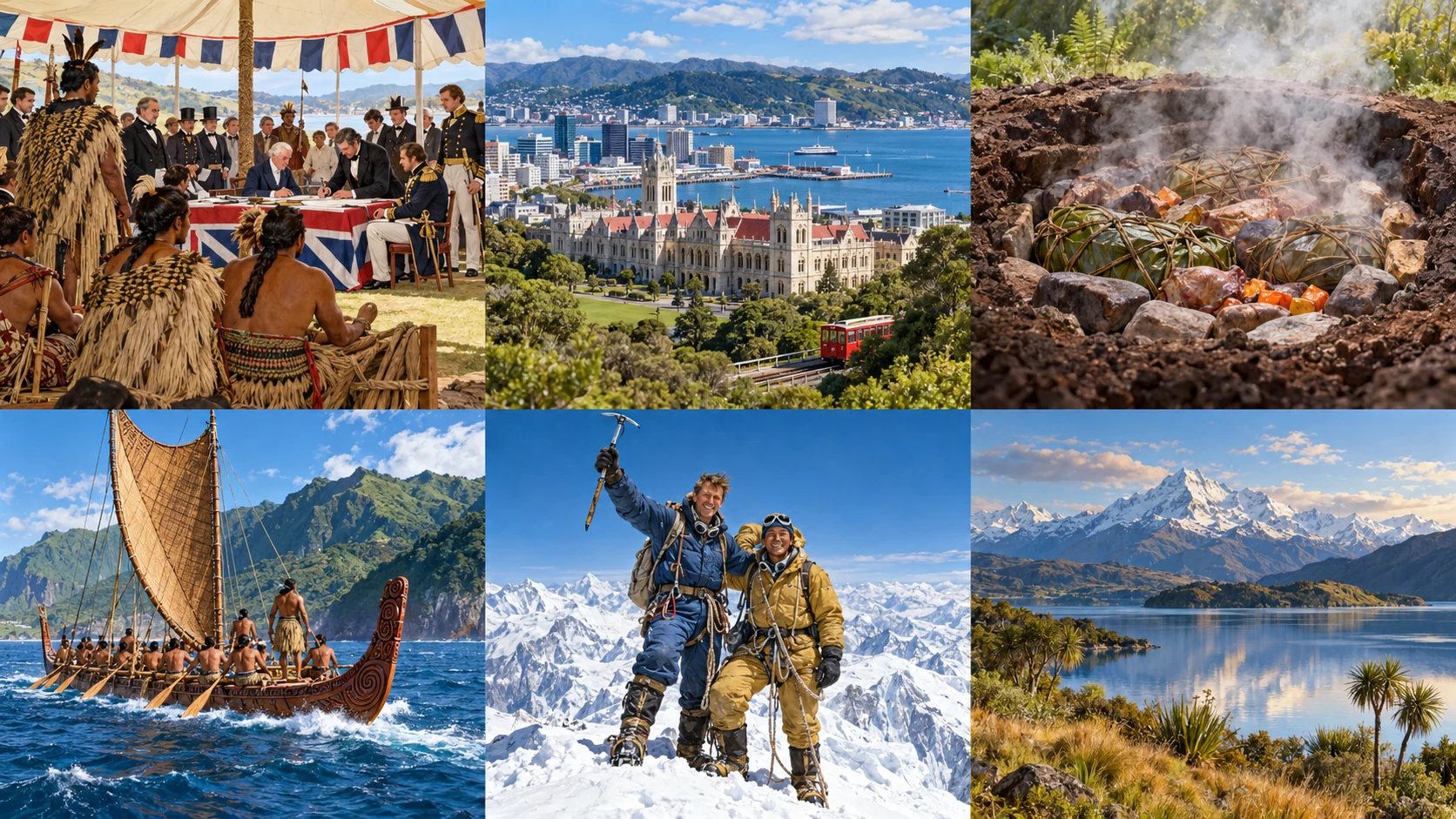
The Treaty of Waitangi was first signed on 6 February 1840. Its Māori and English texts have important differences; the treaty’s history helps explain contemporary New Zealand.
Source: NZ History
27. The capital moved from Auckland
Auckland was the capital before the government moved to Wellington in 1865. Today the country’s largest city and its political centre are different places.
Source: NZ History
28. Hāngi: cooking in the ground
A traditional hāngi cooks food in an earth oven using heated stones. Steam and heat retained by the ground make it a distinctive part of shared meals and Māori food culture.
Source: Te Ara
29. Voyagers from Polynesia
Māori ancestors arrived from Polynesia around the late thirteenth century. Long ocean voyages and navigational knowledge began the human history of Aotearoa.
Source: Te Ara
30. Hillary and Tenzing reached Everest together
On 29 May 1953 New Zealander Edmund Hillary and Tenzing Norgay made the first confirmed ascent of Everest. Their achievement is best understood as the shared success of two climbers.
Source: NZ History
People and inventions
31. To the South Pole by tractor
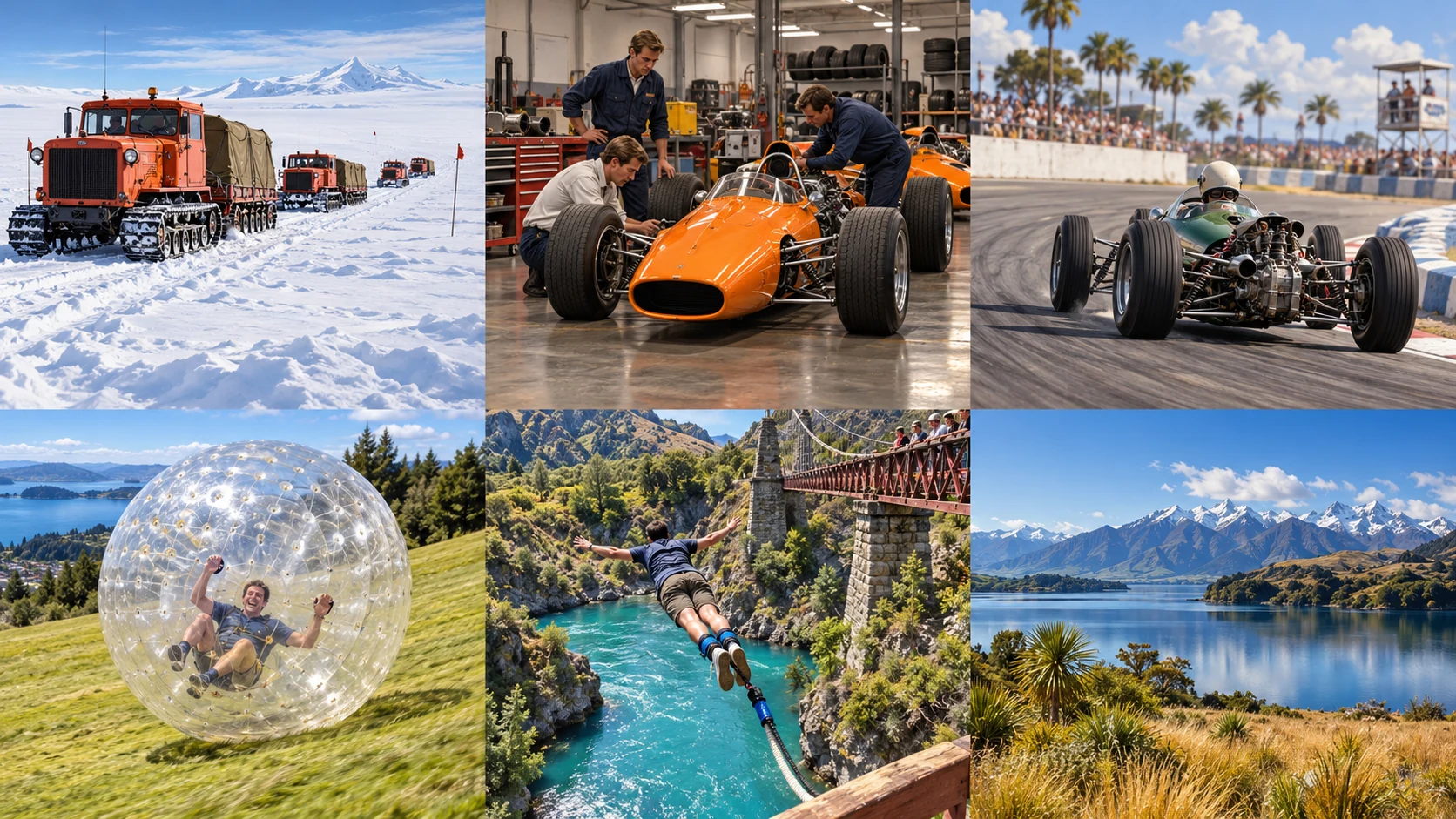
On 4 January 1958 Hillary’s party reached the South Pole using modified tractors. It is an unexpected chapter in Antarctic exploration and a memorable example of New Zealand resourcefulness.
Source: NZ History
32. Bruce McLaren: from Auckland to a racing team
Bruce McLaren was born in Auckland and founded his own racing team in 1963. His name became part of international motorsport history, spanning Formula 1, racing cars and road cars.
Source: McLaren Racing
33. McLaren’s Grand Prix win at 22
In December 1959 McLaren won the US Grand Prix at Sebring driving a Cooper. Aged 22, he became the youngest world-championship Grand Prix winner at that time, a historical rather than current age record.
Source: McLaren Racing
34. ZORB was developed in New Zealand
Andrew Akers and Dwane van der Sluis developed ZORB in 1994. Rolling downhill inside a large transparent sphere became an unusual visitor activity, particularly associated with Rotorua.
Source: ZORB
35. Kawarau: the start of commercial bungy
The first permanent commercial bungy operation opened at Kawarau Bridge in 1988. The milestone concerns commercial bungy; older traditions of jumping from heights existed in other cultures.
Source: AJ Hackett Bungy
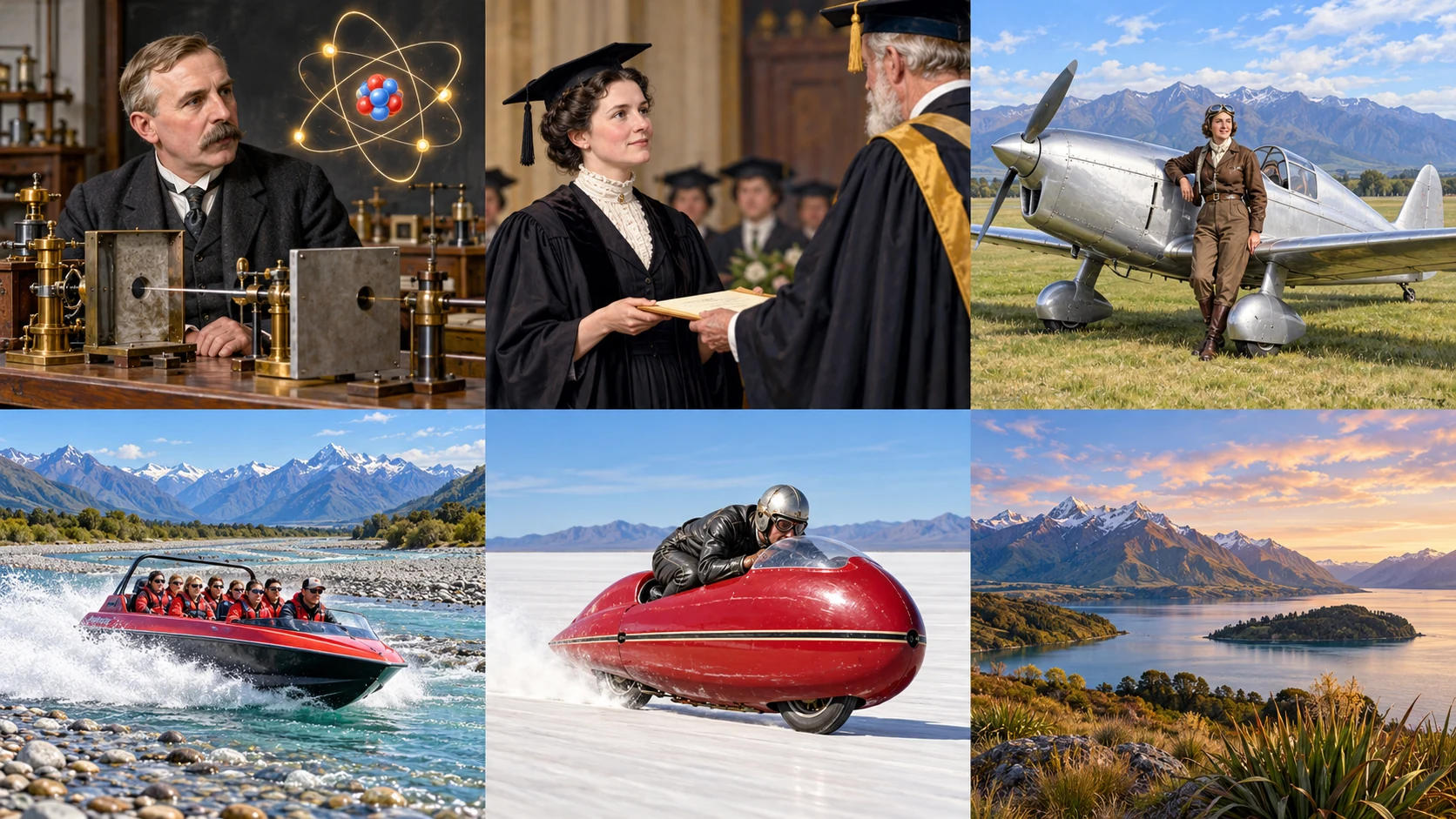
36. Rutherford: New Zealand roots of atomic science
Ernest Rutherford was born near Nelson. His research transformed understanding of the atom, and he received the 1908 Nobel Prize in Chemistry, although his name is closely associated with physics.
Source: NZ History
37. Kate Edger: a university milestone
In 1877 Kate Edger became the first woman in New Zealand to gain a university degree. Her story shows women’s access to education expanding before the suffrage reforms.
Source: NZ History
38. Jean Batten: a solo flight from England
In 1936 Jean Batten flew solo from England to New Zealand, arriving in Auckland on 16 October. Her achievement is an important chapter in early long-distance aviation.
Source: NZ History
39. The HamiltonJet waterjet
In the 1950s Bill Hamilton developed a practical waterjet for boats travelling on shallow rivers. The engineering advance helped make New Zealand jet boats a distinctive part of river adventures.
Source: Engineering New Zealand
40. Burt Munro: a record from Invercargill
Burt Munro spent years improving his Indian motorcycle and set a class record at Bonneville in 1967. His story inspired the film The World’s Fastest Indian.
Source: E. Hayes & Sons
Film and everyday life
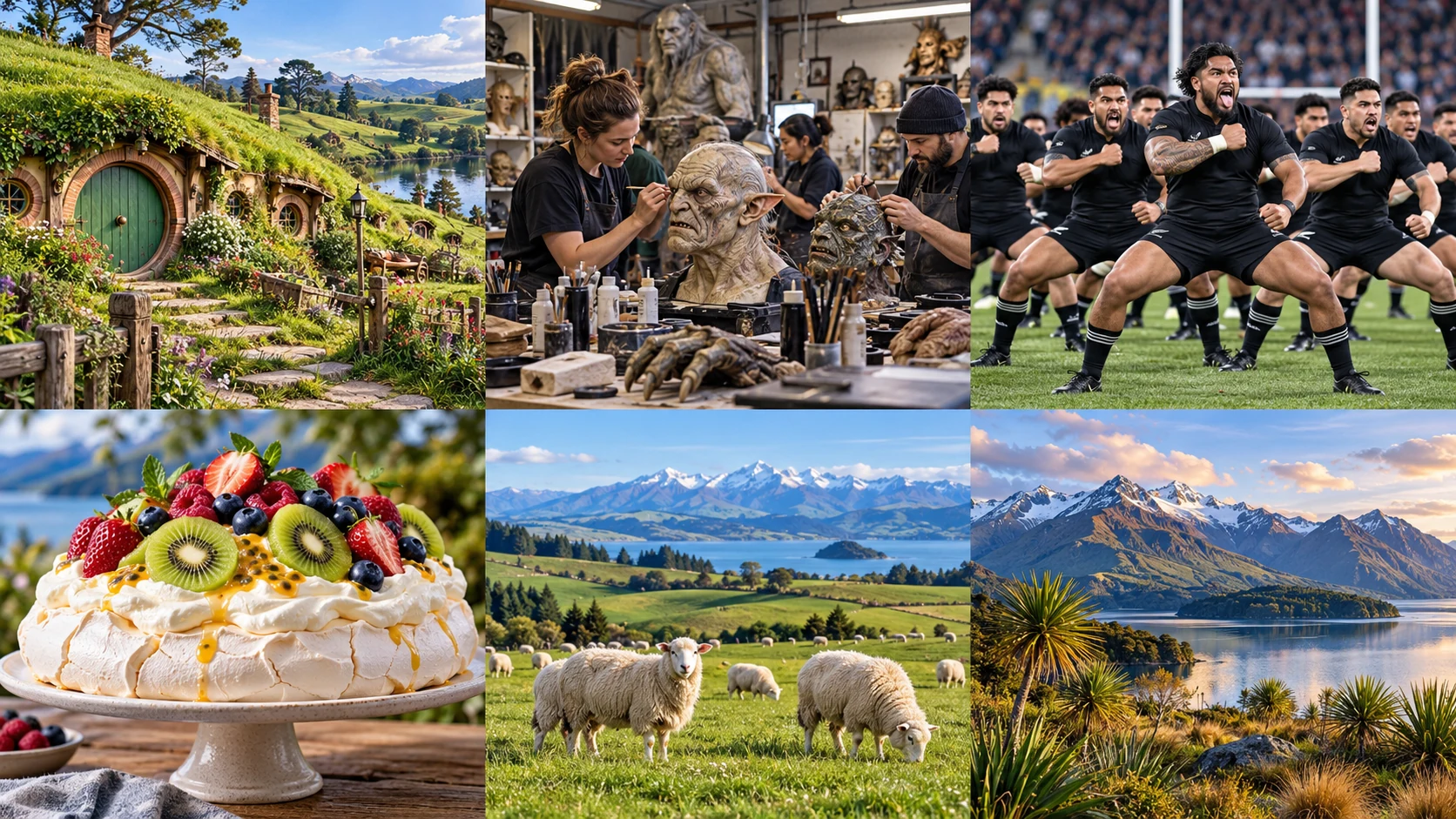
41. Hobbiton: a set made permanent
The Alexander family’s farm houses 44 permanent Hobbit Holes rebuilt for The Hobbit trilogy. A film set became an operating visitor attraction near Matamata.
Source: Hobbiton Movie Set
42. Wētā Workshop: film begins in a workshop
The company grew from RT Effects, founded by Richard Taylor and Tania Rodger in 1987. Work on props, creatures and imagined worlds helped make Wellington a notable centre of film production.
Source: Wētā Workshop
43. The All Blacks have more than one haka
The All Blacks perform Ka Mate and Kapa o Pango; the latter debuted in 2005. Haka expresses identity, unity and challenge, with meaning extending beyond a pre-match spectacle.
Source: New Zealand Rugby
44. Pavlova: a dessert with a shared history
The airy meringue dessert is named after ballerina Anna Pavlova. Both New Zealand and Australia claim it; the history of its recipes is more complex than a simple one-country invention story.
Source: Te Ara
45. More sheep than people, but the numbers change
Sheep still outnumber residents. MPI’s December 2025 report gives about 23.2 million sheep; familiar old ratios of five or six sheep per person should not be treated as permanent.
Source: Ministry for Primary Industries
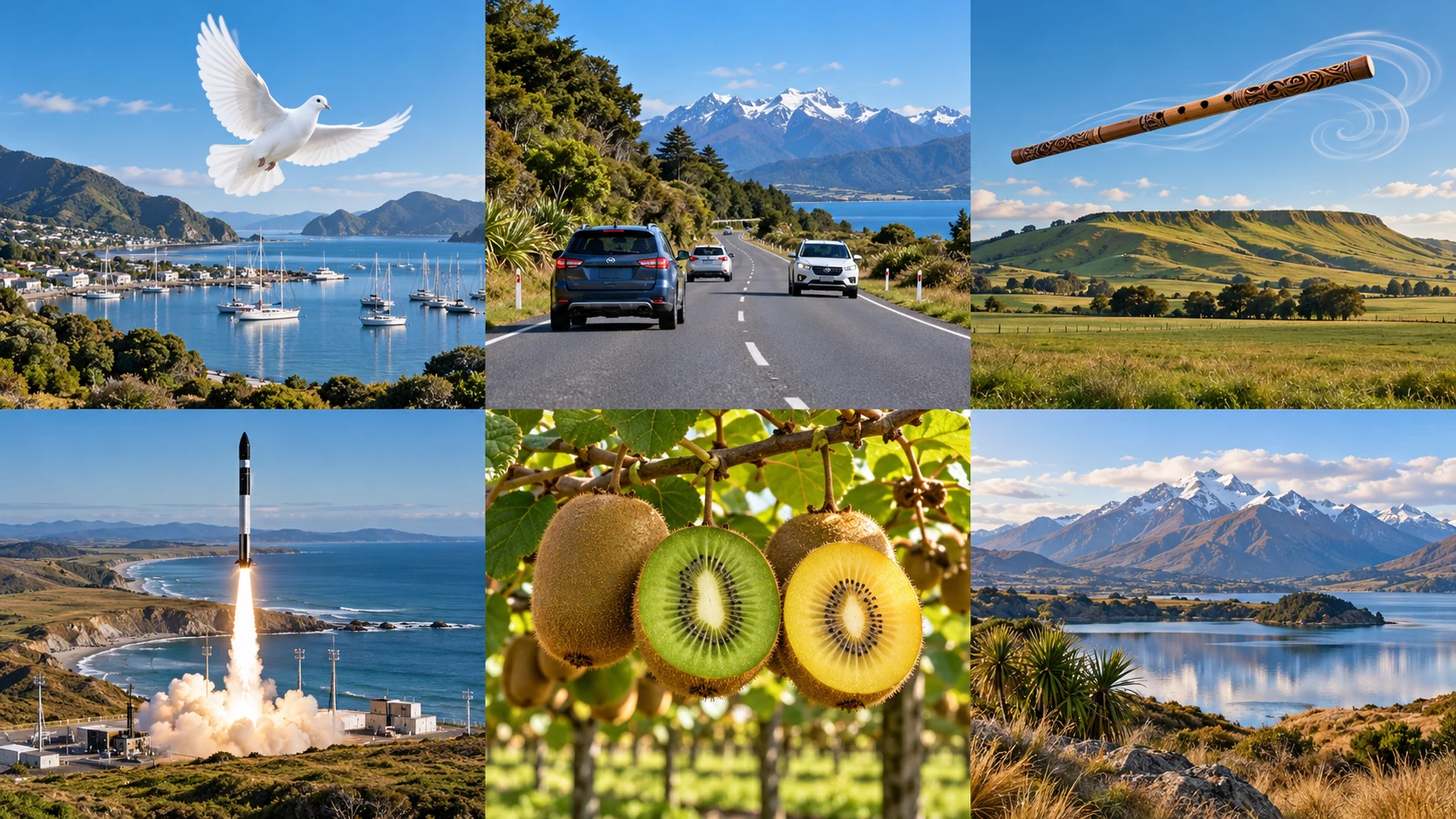
46. Nuclear-free legislation since 1987
New Zealand established its nuclear-free status in law in 1987. The policy became an important part of its international identity and the history of public campaigning.
Source: NZ History
47. Driving is on the left
New Zealand drives on the left. For a visitor itinerary this is a practical fact: driving habits, winding roads and realistic travel times all deserve consideration when planning.
Source: NZTA Waka Kotahi
48. Taumata: an 85-letter place name
Taumata hill in Hawke’s Bay is known for an 85-letter form of its Māori name. The name preserves a story about Tamatea and his flute, a cultural narrative as well as a linguistic curiosity.
Source: The Longest Place Name Project
49. From Māhia Peninsula into orbit
On 21 January 2018 Rocket Lab’s Electron reached orbit for the first time after launching from Māhia Peninsula. A New Zealand landscape became associated with space launches as well as tourism.
Source: Rocket Lab
50. Kiwifruit originated in China
Seeds were brought from China in 1904. The name kiwifruit was adopted as a marketing decision in 1959: cultivation and exports made the fruit a New Zealand symbol, rather than its botanical origin.
Source: Te Ara
Exploration and events

Hector Garcia from Barcelona, Catalonia, Spain · CC BY-SA 2.0
51. Tasman sighted the islands in 1642
Abel Tasman was the first known European to sight New Zealand. He reached its coast in December 1642 but did not go ashore.
Source: Te Ara

W. Bulach · CC BY-SA 4.0
52. Cook and the coastline map
James Cook arrived in 1769 and explored the coastline. This was European mapping of an inhabited country, rather than the beginning of its human history.
Source: Te Ara

Alex Siale · CC0
53. The name connects to Dutch Zeeland
Nova Zeelandia appeared on a seventeenth-century map after the Dutch province of Zeeland. The English form New Zealand preserves that geographical connection.
Source: Te Ara

Tom Ackroyd · CC BY-SA 4.0
54. Dominion status in 1907
On 26 September 1907 the colony became the Dominion of New Zealand. Independence developed gradually; this date alone does not describe the entire constitutional journey.
Source: Stats NZ historical yearbook

Berlin-George · Public domain
55. Dollars replaced pounds
On 10 July 1967 dollars and cents replaced pounds, shillings and pence. Decimal currency changed everyday shopping and calculations.
Source: NZ Legislation

AndyScott · CC BY-SA 4.0
56. Anzac Day: remembrance rather than victory
Anzac Day is observed on 25 April, with the first commemorations in 1916. It remembers service and sacrifice rather than celebrating a military victory.
Source: NZ History

DS Pugh · CC BY-SA 2.0
57. The flag’s four Southern Cross stars
The flag featuring four red Southern Cross stars was officially recognised in 1902. It is easily confused with Australia’s flag, but the star design differs.
Source: Manatū Taonga

Kiwi Flickr · CC BY 2.0
58. The first Rugby World Cup
New Zealand and Australia jointly hosted the first Rugby World Cup in 1987. The All Blacks became its first champions.
Source: NZ History

lumoplank · CC0
59. Napier rebuilt after an earthquake
The Hawke’s Bay earthquake of 3 February 1931 devastated much of Napier. Subsequent rebuilding explains the concentration of Art Deco architecture visitors see today.
Source: NZ History

Michal Klajban · CC BY-SA 4.0
60. Christchurch: a city of recovery
The earthquake of 22 February 2011 was a tragedy for Christchurch. Today’s cityscape reflects a long recovery and remembrance of those who died.
Source: NZ History
Remarkable places and landscapes

russellstreet · CC BY-SA 2.0
61. Auckland stands on a volcanic field
GeoNet identifies 53 volcanic centres in Auckland. The city’s hills are part of a volcanic landscape, not simply convenient viewpoints.
Source: GeoNet

Bruce Hayward · CC BY-SA 4.0
62. Rangitoto is a young volcanic island
The Auckland field’s youngest volcano erupted around 600 years ago. Its symmetrical outline is visible from the city and recalls the region’s geological youth.
Source: GeoNet

Maros M r a z (Maros) · CC BY-SA 3.0
63. Milford Sound is actually a fiord
Despite Sound in its name, Milford is a glacial fiord. Ice shaped its steep walls and valley before the sea flooded it.
Source: UNESCO

Allie_Caulfield · CC BY 2.0
64. Doubtful Sound has no direct road access
There is no direct road to Pātea / Doubtful Sound. Visits normally involve Lake Manapōuri and a separate transfer to the fiord, rather than an ordinary roadside stop.
Source: DOC

Emilio floris at English Wikipedia · Public domain
65. Hauroko is the country’s deepest lake
Lake Hauroko in Southland reaches 462 metres in depth. Its relatively low tourist profile does not diminish its geographical distinction.
Source: Te Ara

Pseudopanax at English Wikipedia · Public domain
66. Te Waikoropupū: immense cold-water springs
Te Waikoropupū are New Zealand’s largest freshwater springs. DOC highlights their extraordinary clarity; the site has deep cultural significance and its water must not be touched.
Source: DOC

W. Bulach · CC BY-SA 4.0
67. Punakaiki’s Pancake Rocks
Layered limestone rocks resemble stacks of pancakes. Waves surge through cavities and blowholes, so the same place looks different as sea conditions change.
Source: DOC

Beast from the Bush · CC BY-SA 3.0
68. Moeraki Boulders are natural concretions
The near-spherical Moeraki Boulders are natural concretions formed within sedimentary rock. They are a geological phenomenon rather than human-made stone balls.
Source: DOC

Krzysztof Golik · CC BY-SA 4.0
69. Cathedral Cove’s natural arch
Mautohe Cathedral Cove’s arch was shaped by natural processes in coastal rock. Access and track conditions can change; a familiar photograph does not guarantee entry on any particular day.
Source: DOC

Steve & Jem Copley · CC BY-SA 2.0
70. Hot water beneath a beach
At Hot Water Beach thermal water emerges beneath the sand in a specific area. Access depends on low tide; nature’s timetable matters more than a tour schedule.
Source: Destination Coromandel
Birds, forests and conservation

Pseudopanax at English Wikipedia · Public domain
71. Takahē were rediscovered in 1948
Takahē were considered lost until Geoffrey Orbell’s expedition found them in the Murchison Mountains on 20 November 1948. The discovery gave conservation a second chance.
Source: DOC

frances schmechel · CC BY-SA 2.0
72. Black robin: recovery from five birds
In 1980 only five black robins and one breeding pair remained. Old Blue’s story became a celebrated example of how close a species can come to extinction.
Source: DOC

Charles J. Sharp · CC BY-SA 4.0
73. Kererū helps forests regenerate
Kererū can swallow large native-tree fruits and disperse their seeds. This pigeon matters not only as a beautiful resident but also as an agent of forest regeneration.
Source: DOC

Charles J. Sharp · CC BY-SA 4.0
74. Tūī: a native nectar feeder
Tūī belongs to the honeyeater family and feeds mainly on nectar. Its white throat tuft helps identify the bird even without recognising its distinctive voice.
Source: DOC

Pseudopanax at English Wikipedia · Public domain
75. Albatrosses near Dunedin
Taiaroa Head hosts the Southern Hemisphere’s only mainland breeding albatross colony. It offers an unusual opportunity to learn about ocean-going birds near a city.
Source: DOC

Avenue · CC BY-SA 3.0
76. Kororā are the smallest penguins
Little penguins, or kororā, are the world’s smallest penguins. They occur beyond New Zealand, so describing them as exclusively New Zealand birds would be incorrect.
Source: DOC

Oren Rozen · CC BY-SA 3.0
77. Fur seals have visible ears
The New Zealand fur seal is an eared seal. Visible external ears and its ability to support itself on flippers distinguish it from true seals.
Source: DOC

W. Bulach · CC BY-SA 4.0
78. Kauri: giants of northern forests
Kauri grow into immense forest trees with broad trunks. Kauri dieback threatens them, and cleaning footwear on forest tracks helps protect this living heritage.
Source: DOC

Ed323 at English Wikipedia · Public domain
79. Pōhutukawa: the Christmas tree
Pōhutukawa’s summer flowering coincides with Christmas. Its red coastal blossoms remind visitors that Christmas falls in summer in the Southern Hemisphere.
Source: Te Ara

Prosperosity · CC0
80. The silver fern is a real plant
The country’s famous emblem is a real fern. Its name comes from the silvery underside of its fronds, not simply the colour of a sporting logo.
Source: Te Papa
Culture and city stories

Andrew Sullivan · CC BY-SA 3.0
81. Pounamu: stone with cultural meaning
Pounamu is used for ornaments, tools and treasured taonga. Its meaning connects to provenance, relationships and an object’s history, rather than simply its green colour.
Source: Te Ara

New Zealand Government, Office of the Governor-General · CC BY 4.0
82. Marae: a community space
A marae is a place for gatherings, ceremony and hospitality. It belongs to a living community: visitors follow invitations and local protocol rather than treating it as an unrestricted photo backdrop.
Source: Te Ara

U.S. Air Force photo/Tech. Sgt. Shane A. Cuomo · Public domain
83. Hongi: a traditional greeting
In a hongi people press noses together. In ceremonial settings it is part of the meeting between hosts and guests, with the welcome guided by the hosts.
Source: Te Ara

Honet at English Wikipedia · CC BY-SA 3.0
84. Poi connects movement and rhythm
Poi is a ball on a cord used in Māori performance. Movement and tapping create rhythmic patterns; it belongs to a cultural tradition rather than being merely a stage prop.
Source: Te Ara

ShakyIsles · CC BY-SA 4.0
85. Whakapapa connects generations
Whakapapa is genealogy and a system of connections at the heart of Māori knowledge. It helps explain relationships between people, ancestors and place.
Source: Te Ara

QFSE Media · CC BY-SA 3.0 nz
86. Sky Tower: 328 metres above Auckland
Sky Tower measures 328 metres to the top of the structure. It is a skyline landmark, but that figure is not the height of the observation deck.
Source: SkyCity Auckland

Ulrich Lange, Bochum, Germany · CC BY-SA 3.0
87. Te Papa opened in 1998
The national museum Te Papa opened on Wellington’s waterfront on 14 February 1998. It brings together history, natural collections, art and cultural taonga.
Source: Te Papa

Gah4 · CC0
88. Dunedin’s railway station dates from 1906
Dunedin’s railway station opened in 1906. Its elaborate design reflects the importance railways once held in the region’s development.
Source: Dunedin City Council

Pseudopanax at English Wikipedia · Public domain
89. Larnach Castle on Otago Peninsula
Larnach Castle is a historic estate on Otago Peninsula. It expresses nineteenth-century New Zealand history through architecture, rather than being a medieval European fortress.
Source: Larnach Castle

Hagai Agmon-Snir حچاي اچمون-سنير חגי אגמון-שניר · CC BY-SA 4.0
90. Akaroa’s French history
French settlers arrived in Akaroa in 1840. Their presence shaped local history and names, without making the whole South Island a French territory.
Source: NZ History
Achievements and living heritage

Harry Gore. · Public domain
91. The Otago gold rush
The 1861 gold discovery at Gabriel’s Gully triggered a major gold rush. It accelerated migration and economic development in Otago.
Source: NZ History

Kevin Prince · CC BY-SA 2.0
92. TranzAlpine crosses the Southern Alps
TranzAlpine connects Christchurch and Greymouth through the Southern Alps. One journey moves from Canterbury’s plains to mountains and West Coast forests.
Source: Great Journeys New Zealand

Takeshi Aida from Hong Kong, Hong Kong · CC BY-SA 2.0
93. Wellington’s cable car dates from 1902
Wellington Cable Car began carrying passengers in 1902. It remains a transport link between the centre and Kelburn, as well as a visitor attraction.
Source: Wellington Cable Car

Librarian Conan · CC0
94. Earnslaw: a steamship from 1912
TSS Earnslaw was built in Dunedin, dismantled and transported by rail for reassembly beside Lake Whakatipu. Its lake-going history began in 1912.
Source: RealNZ

Pseudopanax at English Wikipedia · Public domain
95. A power station beneath Lake Manapōuri
Manapōuri’s hydro generating hall sits in a rock cavern about 200 metres below the lake’s surface. An engineering story lies hidden beneath a tranquil landscape.
Source: Meridian Energy

Jonathan Harker · CC BY 4.0
96. Sauvignon Blanc’s story extends beyond Marlborough
New Zealand’s first marketable Sauvignon Blanc quantities were produced at Matua Valley in 1974. Marlborough later made the variety an international calling card for the country.
Source: New Zealand Wine

Kiwimedia (talk) at en.wikipedia · CC0
97. Black Magic won the America’s Cup
In 1995 Black Magic brought New Zealand its first America’s Cup victory. A 5–0 final-series result made the achievement especially memorable.
Source: NZ History

Gage Skidmore · CC BY-SA 2.0
98. The Return of the King: eleven from eleven
At the 2004 ceremony The Return of the King won all eleven awards for which it was nominated. Peter Jackson won as director, co-writer and producer.

Lanma726 at English Wikipedia · CC BY 3.0
99. Katherine Mansfield was born in Wellington
Writer Katherine Mansfield was born in Wellington in 1888. Her short stories became part of world literature, although much of her adult life was spent outside New Zealand.
Source: NZ History

NASA/JPL-Caltech · Public domain
100. William Pickering and the first US satellite
Wellington-born William Pickering led JPL when Explorer 1, the first US satellite, launched in 1958. His career connected New Zealand with space exploration.
Source: NASA / JPL
The first 50 images are illustrations rather than archival photographs. Photos for stories 51–100 come through Wikimedia Commons, with author and licence credits below each image. A photograph of a place or object was not necessarily taken in the year of the event described. Sheep figures refer to the 2025 report.