

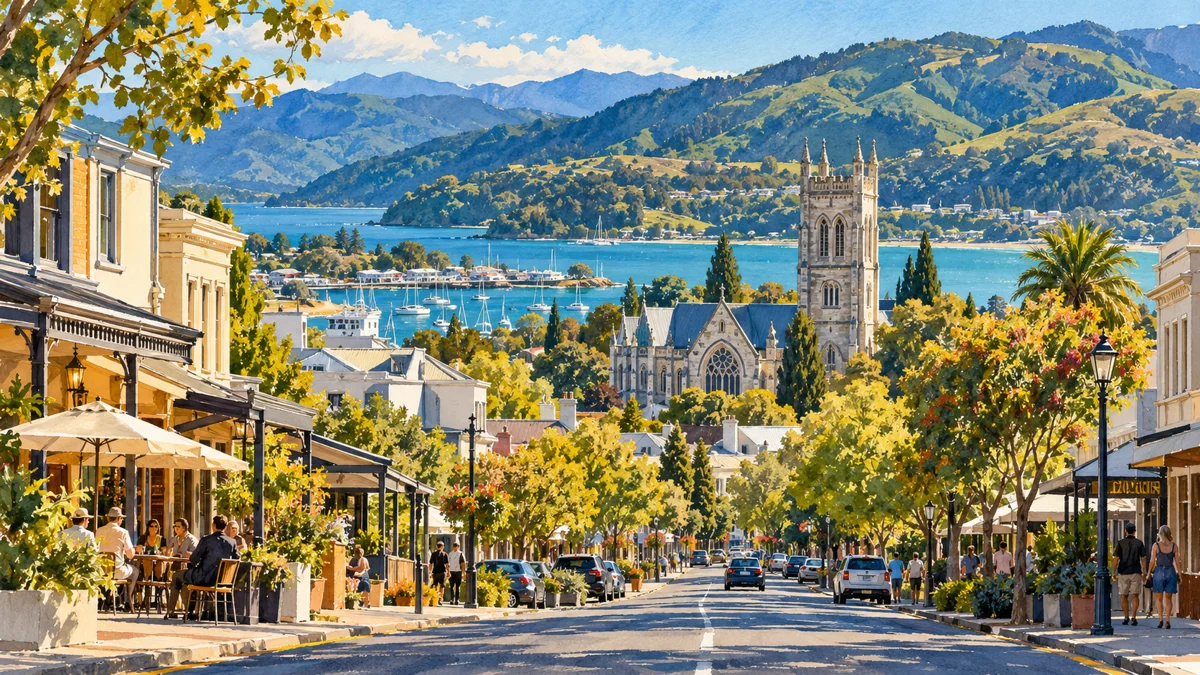
Nelson: The Pearl of New Zealand’s Upper South
The city of Nelson ( Whakatū in Māori ) is located on the east coast of Tasman Bay, at the northern tip of New Zealand’s South Island. It is one of the country’s oldest and most picturesque cities, a combination of maritime beauty, art, a mild climate, and an active lifestyle. Nelson is often called “Sunny Nelson” for its many hours of sunshine per year, and “Top of the South” for its position on the map and the region’s importance.
History and development
European colonization of Nelson began in the early 1840s. The city was founded in 1841 by the New Zealand Company. Nelson received city status by royal charter in 1858 and became an important port and administrative centre for the region.
Deeper down, the area was inhabited by Māori (iwi), who utilized the land, rivers, and coastline, fishing, gathering, and establishing seasonal settlements. After the arrival of Europeans, changes began: land distribution, the development of port facilities, trade, and rapid growth as the region became a transportation hub and a launching point for exploration and development of the West Coast.
Geography, climate and nature
The area around Nelson is geologically diverse, with mountains, hills, and coastal plains. To the east is Tasman Bay, while the surrounding area features hilly and more mountainous areas, rivers, drainage, and a rich flora and fauna. There are also several nearby national parks, including Abel Tasman and Kahurangi, both accessible from Nelson.
The climate is temperate maritime: mild winters and warm summers. Rainfall is fairly evenly distributed, but windy periods and storms occur in winter. The average annual sunshine hours are among the highest among New Zealand’s major cities.
Population, ethnic composition and society
As of 2023, Nelson City’s population is approximately 52,584 , and the regional area (including the Tasman District) is even larger. This provides a good balance: a city not too large, but with enough residents to support an active lifestyle, with services, culture, and amenities.
Ethnically, people of European descent (Pākehā) predominate, with a significant proportion of Māori, and minorities of Asian peoples and others. The percentage of Māori in Nelson is slightly lower than the national population, but its cultural roots are strongly felt—in names, in art, in professions, in the life of the city.
Nelson’s lifestyle is often described as relaxed yet active. People value nature and spend time outdoors—on the beach, in the mountains, trekking, and kayaking. The arts community is quite vibrant, with crafts, galleries, and festivals. The city attracts those who want to live closer to nature but with the benefits of civilization.
Economy and Professions
The region’s economy is based on several key sectors: agriculture (horticulture, fruit and vegetable growing), forestry, fishing, tourism, and food processing. Crafts and artistic production are also strong, and small businesses in the food, cafe, wine, and craft beverage industries are growing.
The Port of Nelson is of great importance, supporting the export of goods, maritime transport, fisheries, and timber. Tourism is also important as a source of employment and investment. The city and region are developing infrastructure, including an airport, logistics facilities, and communications, to support growth.
Culture, art and education
Nelson is known as a hub of culture and creativity. It boasts numerous art galleries, craft workshops, markets, and festivals. Local artists, designers, and artisans of wood, ceramics, glass, and other materials are well represented. Tourists enjoy exploring art trails, seeing exhibitions, and purchasing unique, locally produced items.
Education: Nelson has schools, colleges, further education institutes including the Nelson Marlborough Institute of Technology, and organisations involved in environmental research, conservation and environmental quality.
Tourism and popular places
Tourists come to Nelson for the nature and scenery. Here’s what’s worth visiting:
- Abel Tasman National Park – golden beaches, treks, crystal clear water, kayaking, coastal walks.
- Founders Heritage Park is an open-air museum park with historic buildings and the atmosphere of old Nelson.
- Christ Church Cathedral (Nelson) is an Anglican cathedral in the centre, a beautiful building, architecture, atmosphere.
- Trafalgar Street is the main shopping street, with shops, cafes and walks.
- Tasman Bay and beaches – walks, swimming, views, relaxing on the coast.
- Kahurangi and Nelson Lakes National Parks are ideal for trekking, wildlife, and adventurous travellers.
- The Maitai River is a picturesque river in Nelson, flowing through the city with walking trails around it.
Development prospects and challenges
Nelson faces many opportunities, but also challenges. Growing tourism requires sustainable solutions: environmental protection, coastal protection, and the preservation of flora and fauna. Responsible management of tourist flows, especially in popular national parks, is essential.
Infrastructure development—roads, improved transportation, airport expansion, and housing—is essential to sustaining population growth, especially among young people. The cost of living and housing can be higher than in more remote rural areas, and many people seek a balance between quality of life and affordability.
Climate-related issues—sea level rise, changing weather patterns, and extreme weather events—can also impact coastal areas, agriculture, and the accessibility of tourist destinations. Local authorities and communities are actively working on adaptation and sustainable solutions.
Useful tips for tourists
- Visit Nelson in spring or summer – the weather is warm, nature is in bloom, and there is less rain.
- Bring comfortable shoes for walking and trekking, especially in national parks and along the coast.
- Don’t forget sun protection – Nelson is known for its sun, but its UV rays are strong.
- Plan your accommodation and transportation in advance, especially during holidays and peak seasons.
- Respect local culture and nature – don’t leave litter, follow markings and rules in parks.
Conclusion
Nelson is a stunning place where a sunny climate, natural beauty, vibrant culture, and comfortable living combine. This city is more than just a spot on the map; it’s a place to relax, create, and explore. Nelson offers everything from beaches and treks to art, food, tranquility, and beauty. If you’re planning a trip to the South Island, don’t miss the chance to discover Whakatū/Nelson, a city that will warm you with sunshine, inspire you with nature, and leave you with unforgettable memories.
Illustrations show the character of the places and are not documentary photographs. Opening hours, admission prices and access conditions can change; check the attraction’s official information before booking.
Plan your visit: Nelson
How to fit it into your itinerary
Combine Nelson with the Tasman region. For Abel Tasman, choose a departure point and walking or water-transport plan in advance.
How much time to allow
A day for Nelson; a separate full day for a short Abel Tasman visit.
Before you travel
Check water taxis, the return service, tides on your selected track and DOC alerts.
Official information
- Official website: places, tickets and visitor information
- DOC: access restrictions and alerts
- NZTA: roads and journey times
Times are suggested planning allowances, not guaranteed trip durations. Add driving time, stops and a weather buffer separately. Check current tickets, opening hours and access with the operator; attraction tickets are arranged separately from the driver service.