

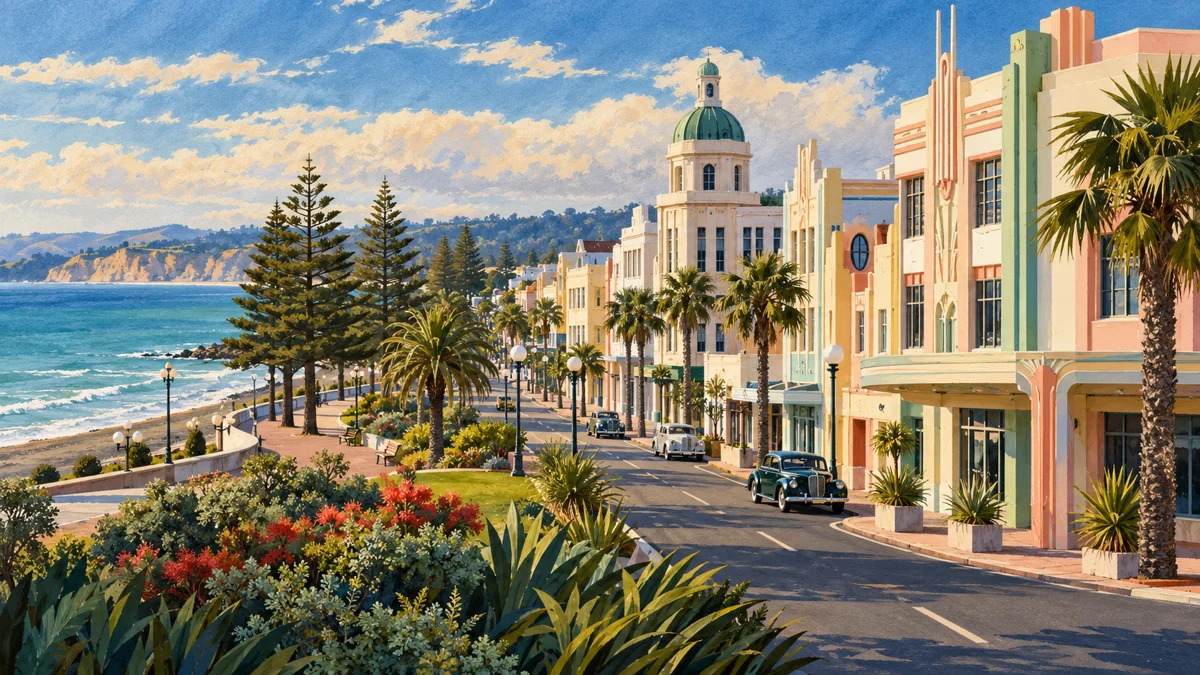
Napier is New Zealand’s art deco capital and the sunny heart of Hawke’s Bay.
Napier is one of New Zealand’s most unique and beautiful cities, located on the east coast of the North Island in the Hawke’s Bay region. It is known for its unique Art Deco architecture, world-class wineries, pleasant climate, and rich history. This city is an excellent destination for visitors looking to combine cultural experiences, culinary delights, and coastal relaxation.
History of the city: from destruction to revival
Napier’s modern appearance was largely shaped by a tragic event. In 1931, a powerful 7.8-magnitude earthquake struck, almost completely destroying the city. More than 250 people died, and most buildings collapsed. However, from the ashes of destruction, the city rose in a unique style—Art Deco, which was at the height of fashion at the time.
Architects and builders from around the world gathered in Napier to rebuild the city. It became one of the few cities in the world where 1930s architecture has been preserved on such a grand scale and in such harmony. Today, Napier is considered the world capital of Art Deco, alongside Miami Beach in the United States.
Population and culture
The city’s population is approximately 66,000. Unlike large metropolitan areas, it has a leisurely and relaxed atmosphere, appreciated by both locals and tourists. The majority of the population consists of descendants of European settlers, Māori, and immigrants from Asia and Europe.
The city actively supports Māori culture, particularly in educational institutions and museums. Napier is also renowned for its vibrant art scene, with numerous galleries, studios, outdoor sculptures, and graffiti inspired by Art Deco architecture.
Modern Napier: Economy, Tourism and Lifestyle
Modern Napier is a thriving city whose economy relies on tourism, winemaking, and fruit and seafood exports. The Hawke’s Bay region is one of the country’s largest wine producers, producing internationally award-winning wines, particularly red varieties such as Merlot, Cabernet Sauvignon, and Syrah.
The city is also known as a family resort with a warm climate, safe beaches, and excellent infrastructure. The city centre boasts well-maintained waterfronts, fountains, cafes, boutiques, parks, and museums. Tourism is a key industry: people come here not only for the architecture but also for gastronomic tours, cycling routes, and festivals.
The most popular places to visit
- The city centre and Art Deco district are a must-see for a stroll. Pastel-colored buildings with geometric patterns create a unique atmosphere.
- Museum Theatre Gallery (MTG Hawke’s Bay) is a museum where you can learn about the 1931 earthquake, regional history and Māori culture.
- Marine Parade is a picturesque promenade with palm trees, fountains, parks, an aquarium and attractions for children.
- National Aquarium of New Zealand – home to penguins, sharks, reptiles, and other New Zealand marine life.
- Te Mata Peak is a picturesque lookout point near Napier, offering panoramic views of the Hawke’s Bay Valley and the Pacific Ocean.
- The region’s wineries —Craggy Range, Mission Estate Winery, Church Road, and others—offer tastings and tours.
- Beaches – Westshore and Ahuriri Beach are particularly popular, suitable for swimming and surfing.
Festivals and Events
Napier is renowned for its cultural events. The most famous is the annual Art Deco Festival , held in February. For several days, the entire city is transformed into a 1930s theatre venue: people dress in vintage costumes, vintage cars cruise the streets, and parades, balls, and concerts take place.
Also popular are the Food and Wine Classic (FAWC!) , Hawke’s Bay Arts Festival , and the IronMāori Triathlon , which combines Māori sport and culture.
Climate and best time to visit
Napier is located in one of the sunniest regions of the country. The climate here is moderately warm and dry. Summer (December–February) is the most popular time to visit, especially during the Art Deco Festival. Winters are mild, although nights can get chilly.
The region receives over 2,200 hours of sunshine throughout the year, making Napier a great destination for outdoor recreation and winery tours.
Development prospects
Napier is actively developing its infrastructure and focusing on sustainable tourism. Key investments are focused on preserving architectural heritage, developing eco-tourism trails, and expanding tourist services. Plans include modernizing the waterfront, improving public transportation, and supporting local artists and artisans.
The city also strives to attract young professionals by developing its IT sector and innovative startups. This makes Napier not only a resort but also an attractive place to live and work.
Tips for visitors
- If you’re planning a trip in February, book your hotels in advance because of the Art Deco Festival.
- It is recommended to rent a car for exploring the region and visiting wineries.
- Many tours and museums offer materials in English—it’s best to bring an audio guide or use a translator on your phone.
- Don’t forget to take sunscreen and a hat – the sun in New Zealand is very strong.
- Buying wine directly from the wineries is a great way to take a piece of Hawke’s Bay home with you.
Conclusion
Napier is a city where the past and the future coexist harmoniously. Its architecture, wineries, coastline, and sunny atmosphere make it an ideal destination for travel and relaxation. For visitors, Napier offers a unique blend of aesthetics, nature, culture, and gastronomy. It’s a city you’ll want to return to and discover new facets of each visit.
Illustrations show the character of the places and are not documentary photographs. Opening hours, admission prices and access conditions can change; check the attraction’s official information before booking.
Plan your visit: Napier
How to fit it into your itinerary
Include the city in a Hawke’s Bay trip with a central-city and waterfront walk. Book wineries separately from city sightseeing.
How much time to allow
Half a day for the centre; a day with a tour or wineries.
Before you travel
Check Art Deco tours, cellar-door hours and tasting reservations.
Official information
- Official website: places, tickets and visitor information
- DOC: access restrictions and alerts
- NZTA: roads and journey times
Times are suggested planning allowances, not guaranteed trip durations. Add driving time, stops and a weather buffer separately. Check current tickets, opening hours and access with the operator; attraction tickets are arranged separately from the driver service.