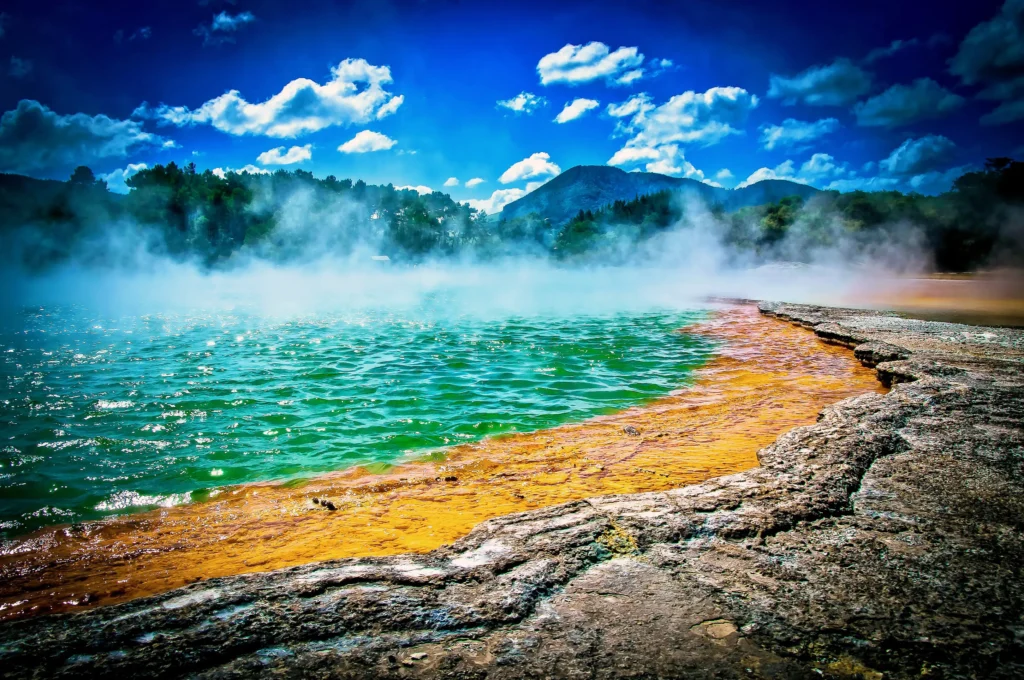


Mount Ruapehu
The volcanic heart of New Zealand’s North Island
Mount Ruapehu is not only the highest peak on New Zealand’s North Island, but also an active stratovolcano with a unique history, natural beauty, and significant cultural significance for the Māori people. This destination attracts thousands of tourists annually, from ski enthusiasts to hikers, geothermal explorers, and those seeking a glimpse into the Lord of the Rings film universe.
In this guide, we’ll explore Ruapehu’s history, its modern significance, interesting facts, and why it’s a must-see on any New Zealand travel itinerary.
General information
- Elevation: 2,797 metres above sea level – this is the highest point on the North Island.
- Volcano type: active stratovolcano.
- Location: Central North Island, within Tongariro National Park.
- Last eruption: 2007 (minor), volcano remains active.
Geography and nature
Ruapehu is surrounded by picturesque landscapes, including mountain ranges, glaciers, alpine meadows, and lava fields. At the mountain’s summit is a crater lake filled with acidic water and one of the few permanent crater lakes in the world formed within an active volcano.
In winter, the mountain’s slopes are covered in snow, making Ruapehu the country’s premier ski resort. In summer, numerous hiking trails offer panoramic views of the neighboring volcanoes—Tongariro and Ngauruhoe.
A Brief History
Māori Legend: For the Māori people, Mount Ruapehu holds deep sacred significance. According to legend, it is one of the “living” mountains that participated in the ancient “Battle of the Volcanoes.” Ruapehu is considered the “guardian of water,” and its crater lake symbolizes the power and unpredictability of nature.
European exploration: Europeans first detailed descriptions of Ruapehu in the mid-19th century. The volcano was studied by geologists… from the late 19th century, the area began to attract tourists, and by the 1920s, ski infrastructure had begun to develop here.
Eruptions and activity
- 1945 – A powerful eruption temporarily emptied the crater lake.
- In 1953, the collapse of the crater lake’s natural barrier released a lahar. A lahar flow destroyed a railway bridge, killing 151 people.
- 1995–1996 – a series of moderate eruptions.
- 2006–2007 – new signs of activity: ash and seismic vibrations.
Today, the volcano is under GeoNet surveillance, and tourists receive regular updates about threats.
Tongariro National Park
The mountain is part of New Zealand’s first national park (founded in 1887) and is protected as a UNESCO site for its cultural and natural heritage.
Ski resorts
Whakapapa (Whakapapa): the largest resort, suitable for all levels, with the Sky Waka cable car operating in summer.
Tūroa: south-facing slope, long runs, snow cover, popular with experts.
Film locations: “The Lord of the Rings”
Scenes from The Lord of the Rings were filmed near Ruapehu (the volcano Ngauruhoe served as the inspiration for Mount Doom). Tour companies offer tours of the filming locations.
Hiking and active recreation
- Skyline Walk is an easy route at the top of Whakapapa.
- Tama Lakes Track – 17 km to Tama Lakes.
- Round the Mountain Track is a multi-day trek around Ruapehu.
- Mangatepopo to Whakapapa is part of the Tongariro Northern Circuit.
Interesting facts
- Temperatures at the summit can reach -20°C even in summer.
- The pH of the crater lake is about 1.5 (acidic).
- The only ski resort on an active volcano in New Zealand.
- Unique alpine wildlife and deep cultural significance in Māori traditions.
Practical advice
- Getting there: About 4 hours from Auckland. The nearest towns are Taupo, Ohakune, and National Park Village.
- Best time: winter (June–September) — skiing; summer (December–March) — trekking.
- Bring with you: warm clothes, boots, glasses, water and food.
- Safety: Check volcano activity on GeoNet.
Conclusion
Mount Ruapehu is more than just a natural landmark; it is a symbol of New Zealand’s strength, culture, and diversity. Combining the majesty of an active volcano, the magic of Māori legends, sporting opportunities, and film history, it captivates everyone who visits.
If you’re travelling around the North Island, include Ruapehu on your itinerary—whether it’s active skiing in winter, trekking in summer, or simply admiring this mighty volcano from afar. The energy of this place will stay with you for a long time.
Illustrations show the character of the places and are not documentary photographs. Opening hours, admission prices and access conditions can change; check the attraction’s official information before booking.
Plan your visit: Mount Ruapehu
How to fit it into your itinerary
Include the region in a multi-day central North Island route. Scenic sightseeing, skiing and alpine hiking need different itineraries.
How much time to allow
Half a day or a day for sightseeing from a nearby base; hiking time depends on the selected track.
Before you travel
Check alpine weather, DOC restrictions and rāhui, lift operations and mountain-road access.
Official information
- Official website: places, tickets and visitor information
- DOC: access restrictions and alerts
- NZTA: roads and journey times
Times are suggested planning allowances, not guaranteed trip durations. Add driving time, stops and a weather buffer separately. Check current tickets, opening hours and access with the operator; attraction tickets are arranged separately from the driver service.