

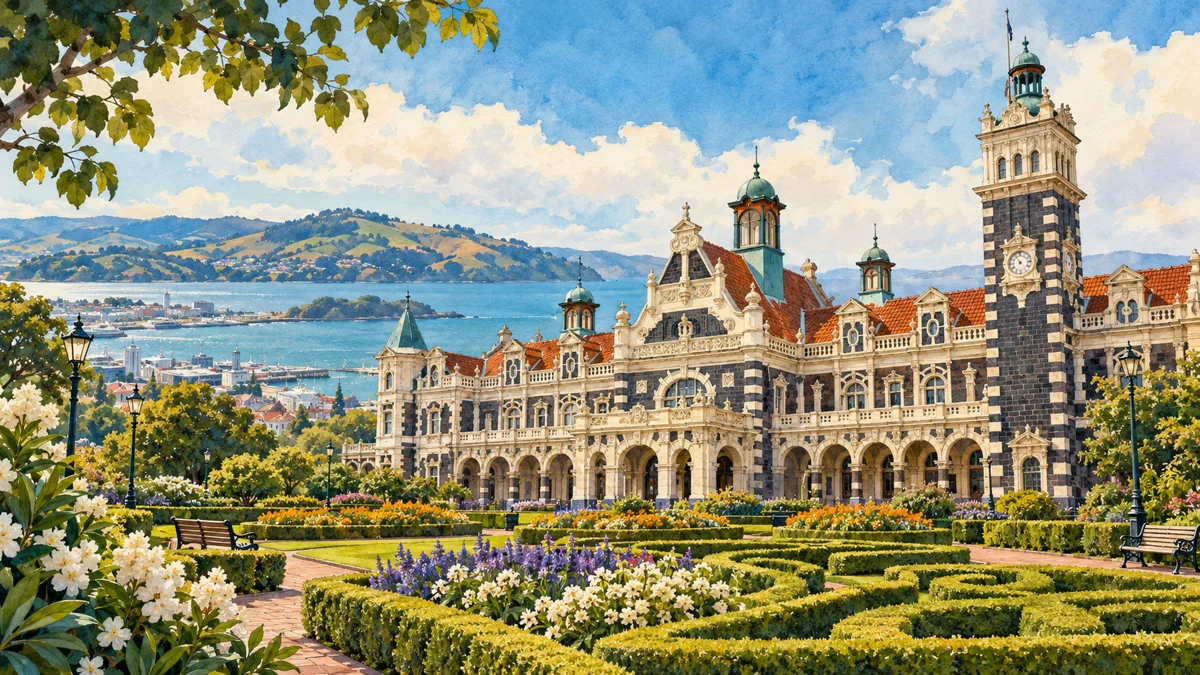
Dunedin is the cultural and historical gem of New Zealand’s South Island.
Dunedin is one of New Zealand’s most fascinating cities, located on the southeast coast of the South Island. With a rich history and unique culture, this city attracts tourists from all over the world. It combines historic architecture, a university atmosphere, and stunning nature. In this article, we’ll explore the most important aspects of Dunedin: its history, people, culture, present and future development, as well as the most popular places to visit.
History of Dunedin
The city was founded in 1848 by Scottish settlers and was named after the ancient Gaelic name for Edinburgh, “Dùn Èideann.” This reflects the strong influence of Scottish culture, which is felt in the architecture, traditions, and even the local accent.
In the 19th century, Dunedin was one of New Zealand’s largest and most prosperous cities, thanks to the gold rush and agricultural development. Beautiful Victorian buildings were built, many of which remain today and are the city’s signature landmark.
Modern Dunedin: Education and Culture
Today, Dunedin is known as a university city. The University of Otago, founded in 1869, is the oldest in the country and attracts students from all over the world. The student atmosphere gives the city a vibrant and creative spirit.
The city’s culture is diverse and rich, with thriving theatres, museums, and art galleries. Dunedin is renowned for its music and theatre scene, as well as its annual festivals, which attract thousands of visitors.
Population
Dunedin’s population is approximately 130,000. It is a mix of descendants of European settlers, Māori, and recent immigrants. Locals pride themselves on their diversity and hospitality. The city boasts thriving cultural initiatives, both traditional and contemporary, making Dunedin vibrant and appealing to a diverse audience.
Popular places and attractions
For tourists, Dunedin offers many interesting places to visit:
- Dunedin railway station is one of the most beautiful Victorian buildings and a symbol of the city.
- Larnach Castle is a magnificent architectural structure inspired by the medieval castles of Scotland.
- Otago Museum is a museum with an extensive collection of Māori history, science and culture.
- The gardens of Dunedin Botanic Park are a great place for strolling and relaxing in nature.
- Otago Peninsula is home to unique wildlife, including colonies of penguins and sea lions.
- Dunedin’s waterfront and St. Clair Beach are popular spots for strolling, surfing, and enjoying ocean views.
Development prospects
Dunedin is actively developing in the areas of education, tourism, and innovation. The government and local authorities are investing in infrastructure, improving the urban environment, and preserving historical heritage. Plans are underway to expand ecotourism programmes, develop cultural projects, and attract investment in new technologies.
In addition, work is underway to improve the quality of life for residents – developing public transport, modernizing the housing stock, and creating additional green spaces.
Climate and features of the region
Dunedin has a temperate maritime climate, with mild summers and cool winters. Winds are frequent, especially in coastal areas. Due to its proximity to the sea, temperatures rarely reach extremes, making the city comfortable for living and travelling year-round.
Practical tips for tourists
- Be sure to visit local cafes and restaurants serving fresh seafood and national cuisine.
- Plan your outdoor trips in advance, taking into account the weather and route features.
- Don’t forget to bring clothes for changeable weather – a windbreaker and a warm layer.
- Respect Māori culture and traditions by visiting national monuments and events.
- Use public transport or bicycles to easily get around the city and its surroundings.
Conclusion
Dunedin is a city with a rich history, unique culture, and a vibrant student community. It combines the best of the past and present, offering tourists comfort, diversity, and experiences. For travellers, it’s a great place to experience New Zealand’s southern culture, nature, and the hospitality of the locals. Visit Dunedin and you’ll discover a city with a rich soul and incredible energy.
Illustrations show the character of the places and are not documentary photographs. Opening hours, admission prices and access conditions can change; check the attraction’s official information before booking.
Plan your visit: Dunedin
How to fit it into your itinerary
Combine the city centre with a separate Otago Peninsula outing. Fit wildlife-centre visits around booked sessions.
How much time to allow
A day for the city and part of the peninsula; 2 days for a less rushed visit.
Before you travel
Check tour times, wildlife-viewing rules and coastal access; sightings are not guaranteed.
Official information
- Official website: places, tickets and visitor information
- DOC: access restrictions and alerts
- NZTA: roads and journey times
Times are suggested planning allowances, not guaranteed trip durations. Add driving time, stops and a weather buffer separately. Check current tickets, opening hours and access with the operator; attraction tickets are arranged separately from the driver service.