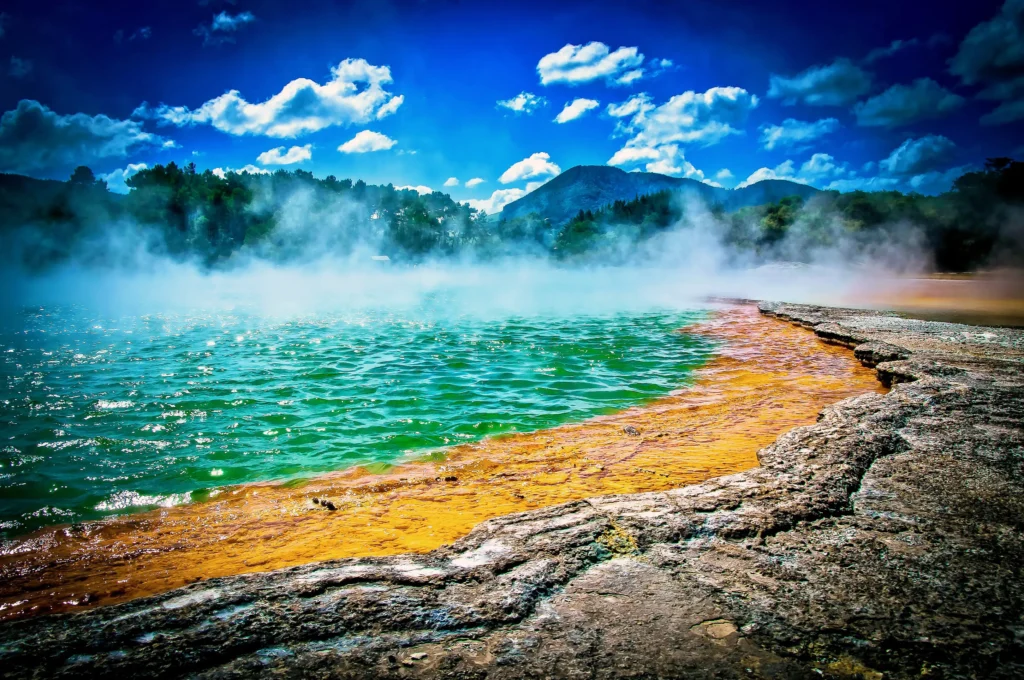


Coromandel
Coromandel Town and its namesake peninsula are a distinctive part of New Zealand’s North Island, a hub of nature, history, and relaxation. The peninsula protects the Hauraki Gulf to the west from the Pacific Ocean to the east, and is located within the Waikato region and the Thames-Coromandel district (Wikipedia).
Origin of names
The name “Coromandel” comes from the British ship HMS Coromandel, which arrived here in 1820 to load kauri timber for the Royal Navy (Wikipedia). The Māori name for the peninsula is Te Tara-o-te-Ika-a-Māui, meaning “the barb (or harpoon) of the fish of Māui,” a reference to the legend of the demi-god Māui, who caught the North Island as a giant fish (Wikipedia).
Early settlement and mining history
Before the arrival of Europeans, the indigenous Māori mined basalt (karā) in the Opito Bay quarries to make tools. Then, in the 19th century, the peninsula became a centre of gold mining and kauri harvesting. Gold prospecting flourished in the Thames region, and the population then grew to 10,000. Remnants of this era can still be seen today: stamping batteries, museums, and mining structures (The Coromandel, Vacation Queenstown, Digital Travel Couple, Wikipedia). Today, many of these sites are open to visitors as historical monuments.
Coromandel Town: A Charming Idyll of History and Creativity
Demography and modernity
Coromandel Town is a small town (approximately 10.9 km²), with a population expected to reach approximately 1,870 by the end of 2024 (NZ Town Scores). The town has become a quiet creative haven, beloved by hippies and artists. It boasts preserved Victorian architecture, numerous crafts and galleries, and a thriving arts and entertainment culture (Coromandel Town, New Zealand).
Main attractions
- Driving Creek Railway, a narrow-gauge mountain railway created by enthusiast Barry Brickell, passes through forest and ceramic objects, leading to an observation tower overlooking the Hauraki Gulf (New Zealand).
- Historic mining equipment – the country’s last working 19th-century stamping battery and gold rush-style museums (New Zealand, Lonely Planet).
- Forest trails and beach walks – routes through Māori groves and Victorian street forms reveal a unique connection between culture and nature (New Zealand).
Natural diversity of the peninsula
Coromandel Forest Park
The central part of the peninsula is occupied by Coromandel Forest Park, a protected area covering approximately 71,900 hectares, with mountains, forests, and recreational areas, including the Kauaeranga Valley with its swimming holes (Wikipedia). Hidden deep within the forests are stunning trails and scenic spots.
Outstanding activities and places
- The Lost Spring is a geothermal resort in Whitianga, surrounded by tropical rainforest, with outdoor pools and spa facilities (New Zealand).
- The Pinnacles trek is a popular route, offering overnight stays in the mountains, sunrises over the peaks and 360° alpine views (New Zealand).
- Kayaking and snorkelling at Cathedral Cove and Orua Sea Cave – the arched rock portal, sea caves and clear waters of Mercury Bay create unforgettable views (New Zealand).
Hot springs and dramatic coves
- Hot Water Beach is a unique place where you can dig your own hot tub in the sand at low tide – a phenomenon of geothermal waters beneath the beach (The Times, New Zealand).
Active recreation and routes
- The Hauraki Rail Trail is a cycle route along former railway lines, leading through Karangahake Gorge and to Owharoa Falls, combining nature and industrial heritage (New Zealand, Wikipedia).
- Whenuakura Wildlife Sanctuary is a protected area accessible by kayaking, with corals, fauna and underwater caves – an important conservation project (New Zealand).
- Recreational Waterfalls – Waiau Falls, Kauri Grove Walk, Waiau Falls – great light trails for the whole family with the opportunity to relax in nature (Albom Adventures).
- Waterworks is an interactive water theme park featuring water features, slides, swings, and engineered aesthetics assembled from recycled materials (Albom Adventures).
Everyday life and atmosphere
The Coromandel Peninsula offers a relaxed, creative, and sustainable lifestyle. Small towns along the coast maintain a relaxed, tranquil atmosphere. The residents are welcoming, and time moves slowly; it’s the perfect place to unplug from the metropolis (The Coromandel, New Zealand).
Travel Tips
- Route and logistics: Buses and ferries from Auckland to Coromandel Town (2–3 hours); driving across the peninsula is possible, but some roads (e.g., Road 309) are unpaved—check rental conditions (Wikipedia).
- Best time: Spring and summer – comfortable weather for trekking, beaches and hot springs.
- Tips for sustainability: Observe the rules on protected trails and stay on route, especially in the forest.
- Unique experiences: digging a hot pool in the sand, overnight stays at the Pinnacles, crafts on a narrow-gauge railway, jungle waterfalls—get ready for unexpected and exciting discoveries.
Conclusion
The Coromandel Peninsula is more than just a place on the map of New Zealand. It’s a synergy of history (gold, kauri, Māori), nature (geothermy, forests, bays), art (artists, local crafts), and spirit (slowness, sustainability). From gold-mining heritage to hot water in the sand and breathtaking views from the Pinnacles, there’s something for every traveler.
Illustrations show the character of the places and are not documentary photographs. Opening hours, admission prices and access conditions can change; check the attraction’s official information before booking.
Plan your visit: Coromandel
How to fit it into your itinerary
Choose one part of the peninsula for a day. Allow an overnight stay for several coastal destinations rather than rushing winding roads.
How much time to allow
One full day for a selected area; 2–3 days for a wider itinerary.
Before you travel
Check roads, Cathedral Cove access and Hot Water Beach tides. Do not assume all tracks are always open.
Official information
- Official website: places, tickets and visitor information
- DOC: access restrictions and alerts
- NZTA: roads and journey times
Times are suggested planning allowances, not guaranteed trip durations. Add driving time, stops and a weather buffer separately. Check current tickets, opening hours and access with the operator; attraction tickets are arranged separately from the driver service.