

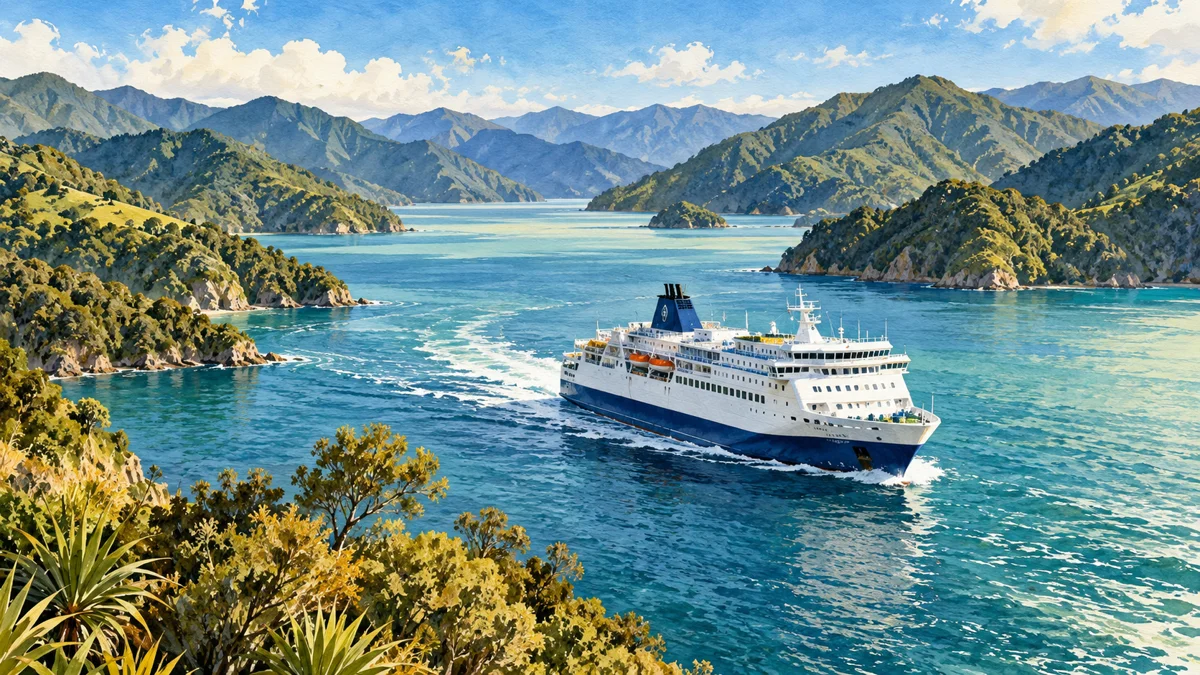
Cook Strait Ferry: How New Zealand’s Islands Are Connected
Cook Strait is not only a barrier of water between New Zealand’s North and South Islands, but also a vital transport corridor, crossed by thousands of passengers and hundreds of vehicles daily. A ferry crossing the strait is more than just a way to get from one island to another; it’s a true journey with picturesque views, a unique atmosphere, and a touch of adventure.
Historical background
Cook Strait was named after the British explorer James Cook, who first documented it in 1770. However, the Māori called it Te Moana-o-Raukawa— “The Sea of Raukawa.” The first ferries here were used by Māori canoes and whalers in the 19th century.
Modern regular ferry service began in the mid-20th century. In 1962, New Zealand Railways launched the first car ferry, the Aramoana , which carried not only passengers but also trains. This gave a major boost to the country’s economic development and linked the two islands into a single transportation system.
Modern carriers
Today, two main operators serve the Cook Strait ferry service:
- Interislander is a fleet of three vessels: Kaitaki , Aratere, and Kaiarahi . These ferries carry passengers, cars, buses, and trucks.
- Bluebridge is a privately owned carrier offering competitive prices and convenient service for both travellers and carriers.
Both operators offer several sailings daily. Travel time is approximately 3–3.5 hours .
Route and views
Ferries depart from the country’s capital, Wellington , on the North Island and arrive in the picturesque town of Picton on the South Island. During the journey, passengers cross the turbulent Cook Strait and sail through the magnificent Marlborough Sounds —a network of narrow bays, islets, and rocky headlands. It’s one of the most beautiful sea routes in the world.
What does the ferry offer on board?
Ferries are well equipped for long journeys. Depending on the vessel and ticket class, passengers have access to:
- Comfortable chairs and lounge areas;
- Cafes and restaurants serving local cuisine;
- Children’s playrooms;
- Cinemas (on some Interislander sailings);
- Wi-Fi and sockets;
- Panoramic decks for photography and enjoying the views.
It is also possible to book a separate cabin, which is especially convenient for those travelling at night or with children.
Traveling by car
One of the main advantages of the ferry is the ability to transport your car . Simply drive on board, leave your car in the cargo hold, and then head up to the passenger deck. Upon arrival in Picton, you can continue your journey around the South Island without transfers or renting another vehicle.
Please note that it is advisable to book places with a car in advance, especially during the high season (summer, New Year holidays and school holidays).
Prices and booking
Prices vary depending on the carrier, time of day, ticket type and vehicle availability:
- Foot passenger ticket : NZD 60 to NZD 95 per adult;
- Car + driver : from 150 to 250 NZD (depending on the size of the car and travel time);
- Cabin or premium area : for an additional fee (from 40 NZD).
It’s best to book tickets on the official Interislander and Bluebridge websites . Discounts are often available for early bookings or for families.
Interesting facts
- Cook Strait is one of the roughest waters in the world. Bad weather can lead to sailing delays or cancellations.
- Every year, more than 1 million passengers and over 250 thousand vehicles cross the ferry.
- The Interislander is considered one of the most scenic ferry crossings in the world by National Geographic.
- In the 1980s, there were plans to build an underwater tunnel between the islands, but they were deemed impractical.
Helpful tips
- Arrive at the port 1 hour before departure if you don’t have a car, and 90 minutes before departure if you have a car.
- Bring warm clothes with you – it can be windy on deck even in summer.
- If you are sensitive to motion sickness, take motion sickness tablets.
- Charge your devices in advance—on-board Wi-Fi may be unstable.
Conclusion
The Cook Strait ferry is not only a convenient way to travel from the North to the South Island (and vice versa), but also a fascinating adventure. Magnificent views, a comfortable onboard experience, and the feeling of being on a sea voyage make this trip a memorable part of any New Zealand itinerary. If you’re planning to explore both islands, don’t miss the chance to experience it for yourself. Cook Strait awaits!
Illustrations show the character of the places and are not documentary photographs. Opening hours, admission prices and access conditions can change; check the attraction’s official information before booking. Interislander sailing information.

Cook Strait ferries: Interislander and Bluebridge
Ferries link Wellington and Picton, carrying passengers and vehicles. The open Cook Strait crossing gives way to the sheltered Marlborough Sounds. Tickets, terminals and check-in rules depend on the operator.
Interislander
Interislander — check sailings, passenger and vehicle check-in, baggage and sailing status on the official website. The operator lists around 3.5 hours sailing time; add check-in and disembarkation separately.
Bluebridge
Bluebridge — an alternative operator on the Wellington–Picton route. Compare suitable sailings, fares, ticket-change terms and the facilities on your selected ship.
Fit it into your itinerary
Before buying, confirm whether the vehicle travels with you. Port drop-off and pickup at the other end can be arranged as separate legs without taking the same car across.
Time to allow
Allow most of a travel day with a buffer. Do not place a train, flight or long road leg immediately after the scheduled ferry arrival.
Before you travel
Check the operator’s terminal, check-in deadline for your ticket type, vehicle length and height if taking a car, baggage and weather alerts.
Official sources and bookings
The illustration represents the destination or transport category and is not a documentary photograph. Check current schedules, prices and access through the official links before travelling.
Plan your visit: Cook Strait
How to fit it into your itinerary
Plan the Wellington–Picton crossing as a separate travel leg. Agree whether the vehicle travels with you or a different driver meets you on the other island.
How much time to allow
Allow most of a travel day for sailing, check-in, disembarkation and possible delays.
Before you travel
Check the timetable, sailing status, check-in deadline, vehicle booking details and luggage rules.
Official information
- Official website: places, tickets and visitor information
- DOC: access restrictions and alerts
- NZTA: roads and journey times
Times are suggested planning allowances, not guaranteed trip durations. Add driving time, stops and a weather buffer separately. Check current tickets, opening hours and access with the operator; attraction tickets are arranged separately from the driver service.