

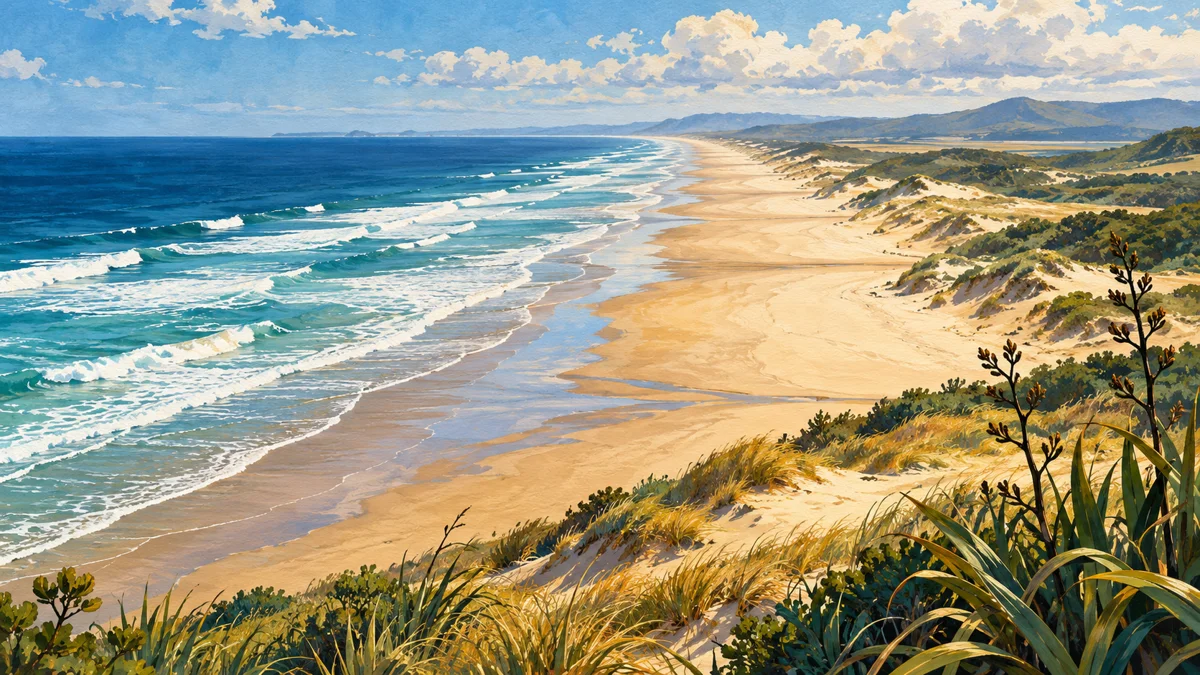
Ninety Mile Beach and Te Paki Sand Dunes: The Sandy Heart of New Zealand’s North
In the far north of New Zealand lies one of the country’s most stunning natural attractions— Ninety Mile Beach and the Te Paki sand dunes . This is a place where endless golden expanses meet the ocean, where you can feel like you’re in the desert while still being right at the water’s edge. This isn’t just a beach—it’s a whole world full of mystery, beauty, and adventure.
A bit of geography
Ninety Mile Beach is located on the west coast of the Aupouri Peninsula, in the Far North District, and stretches almost from the settlement of Kaitaia to Cape Reinga. Despite the name “90 Mile,” the beach’s actual length is approximately 88 kilometres. It is believed that the name arose from a measurement error during the early settlers’ time.
Parallel to the beach are the Te Paki Dunes —huge sand dunes that form a miniature desert landscape. These dunes are located near the northern end of the beach, near Cape Reinga, and are one of the most popular spots for active recreation and photography.
Cultural and spiritual significance
For the Māori people, Ninety Mile Beach and its surroundings hold special significance. The beach is known as Te Oneroa-a-Tōhē— “Tohe’s Long Beach.” Tohe was a Māori leader who, according to legend, walked this entire route to see his daughter. His story is deeply entwined with the Māori cultural memory and continues to inspire locals.
Today, these lands remain an important part of the Māori spiritual and cultural identity. Visitors are encouraged to respect the local culture and adhere to traditional customs and rules of conduct.
Natural features
Ninety Mile Beach is famous for its smooth, wide stretch of sand, which for many years accommodated cars, buses, and even airplanes. Although traffic on the beach is now restricted and requires special accommodations, it remains a favorite spot for strolling, fishing, and tide-watching.
The Te Paki dunes deserve special attention. These sand giants reach heights of up to 150 metres. Their colours range from golden to pinkish, depending on the time of day and sunlight. The wind constantly reshapes them, creating new landscapes literally every day.
Activities and entertainment
One of the most popular activities in the dune area is sandboarding —riding down the slopes of sand dunes on a board. It’s a safe yet exciting activity suitable for both children and adults. Boards can be rented on site from local guides, or you can bring your own.
Tourists often fish on the beach itself —snapper is especially popular. People also enjoy picnicking, birdwatching, sunset strolls, or simply meditating to the sound of the surf.
Another unique feature is the long beach route , which is occasionally used by tour buses heading to Cape Reinga. However, walking on the sand is only possible at low tide and requires experience or a guide.
History and Legends
The area around Ninety Mile Beach was inhabited by the Māori long before the arrival of Europeans. Many ancient legends tell of journeys, battles, and loves associated with this region. The beach itself was long used as a “road” for travel between settlements before the advent of modern roads.
In the 20th century, the beach even began to be used as a runway for small aircraft. It also hosted car races and speed competitions, although such events are now strictly restricted due to environmental concerns.
How to get there
The most convenient way to get to Ninety Mile Beach and the Te Paki Dunes is by car or with a tour group from Kaitaia. It’s important to remember that regular cars aren’t always suitable for driving on the sand. Many tour operators offer all-terrain buses that include stops at the dunes, the beach, and Cape Reinga.
Tips for tourists
- Do not attempt to drive onto the beach without a four-wheel drive vehicle and knowledge of the tides – it can be dangerous.
- Be sure to bring water, sunscreen, a hat and a camera.
- If you plan on sandboarding, wear comfortable clothes that you don’t mind getting dirty.
- Respect nature and local customs – do not litter, do not make noise and do not break the rules.
Conclusion
Ninety Mile Beach and the Te Paki Dunes are more than just tourist attractions; they’re a true symbol of New Zealand’s wild and powerful nature. There’s something for everyone: adventurers will enjoy the speed and wind on the dunes, nature lovers will appreciate the silence and scenery, and those seeking meaning will connect with Māori culture and the spirit of the land. A visit to this place will leave you with not only striking photographs but also a profound impression that will last a lifetime.
Illustrations show the character of the places and are not documentary photographs. Opening hours, admission prices and access conditions can change; check the attraction’s official information before booking.
Plan your visit: Ninety Mile Beach
How to fit it into your itinerary
Add a beach stop to a Far North itinerary using normal road access. Driving on the sand is not automatically part of a private-driver trip.
How much time to allow
30–60 minutes for a stop and walk, plus access travel.
Before you travel
Check tides, weather and permitted access. Arrange any specialist beach-driving trip with its operator.
Official information
- Official website: places, tickets and visitor information
- DOC: access restrictions and alerts
- NZTA: roads and journey times
Times are suggested planning allowances, not guaranteed trip durations. Add driving time, stops and a weather buffer separately. Check current tickets, opening hours and access with the operator; attraction tickets are arranged separately from the driver service.