

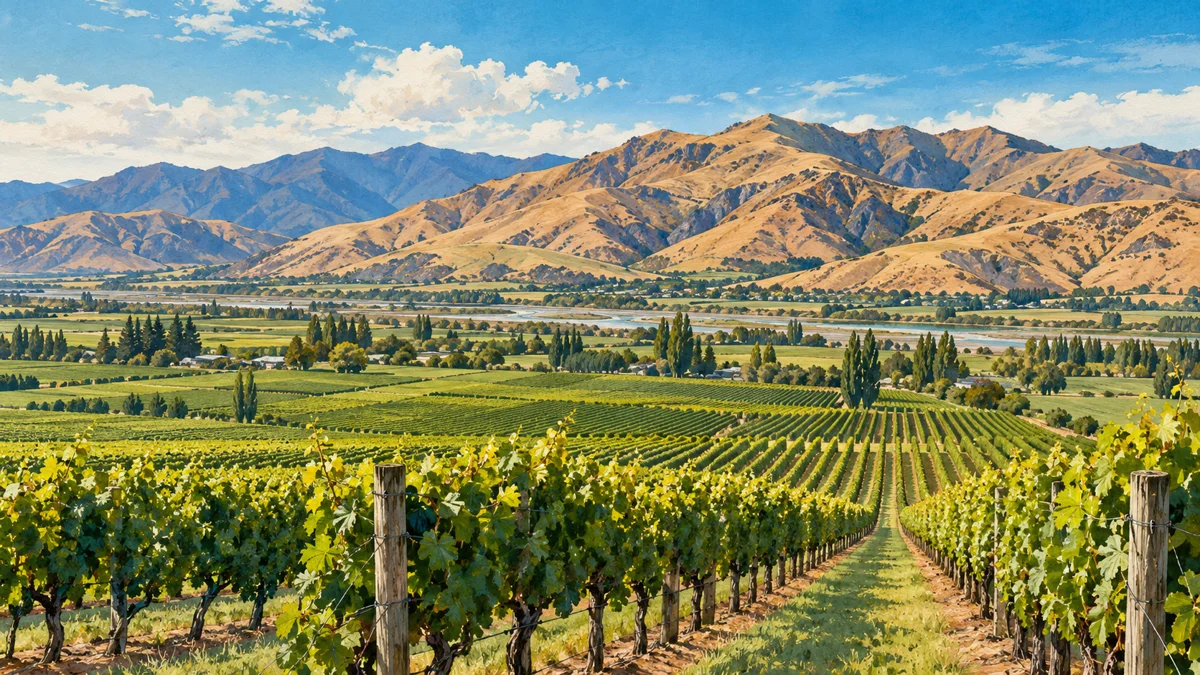
Blenheim: The Heart of the Marlborough Wine Region
Blenheim (Māori name Te Waiharakeke , meaning “waters of flax”) is the capital of the Marlborough region in the northeast of New Zealand’s South Island. It is a picturesque, tranquil, and sunny town surrounded by vineyards, green hills, and rivers. Blenheim is considered the unofficial capital of New Zealand winemaking, particularly renowned for its renowned Sauvignon Blanc grape.
History
Before the arrival of Europeans, this area was inhabited by Māori tribes, who used the region’s marshy plains and rivers for fishing, hunting, and growing food. The name Te Waiharakeke reflects the natural characteristics of these lands—”waters where flax grows.”
With the arrival of European settlers in the mid-19th century, the region began to be actively developed. Blenheim was named after the Battle of Blenheim (1704), which was won by British forces. In 1865, the town became the capital of Marlborough County. Since then, Blenheim has steadily developed as a centre of agriculture and later winemaking.
Geography and climate
Blenheim is located in the fertile Wairau Plain, surrounded by mountains and vineyards. The Ōpaoa and Taylor Rivers flow through the city. The climate here is one of the sunniest in New Zealand, with warm, dry summers and cool but mild winters. These conditions are ideal for growing grapes and enjoying outdoor activities.
Population
As of 2023, Blenheim’s population is estimated to be approximately 27,000. Most residents are of European descent, but Māori, Asian, and Pacific Islander communities are also present. The town is attractive to both seniors seeking a quieter lifestyle and young families working in tourism, winemaking, and agriculture.
Economy
The wine industry is the region’s main economic driver. Marlborough produces approximately 75% of New Zealand’s wine, and Blenheim serves as its logistical and administrative hub. Hundreds of wineries are located around the city, many of which offer tastings, tours, and restaurants.
In addition to wine, the city’s economy is supported by agriculture, food processing, dairy processing, and tourism, which is actively developing thanks to natural attractions and cultural events.
Culture and lifestyle
Blenheim is a calm and safe city with a vibrant cultural scene. It hosts music festivals, wine fairs, art exhibitions, and farmers’ markets. Blenheim residents value quality food, local produce, and fine wine. The city is committed to an eco-friendly lifestyle and supports sustainable development.
Among the cultural attractions, the Omaka Aviation Heritage Centre is worth noting , displaying rare World War I aircraft and dramatic installations by Peter Jackson’s team. The city also boasts the Marlborough Art Society and the Marlborough Museum.
Popular places to visit
- The region’s wineries —hundreds of them around Blenheim—are open to tourists. Among the most famous are Cloudy Bay, Brancott Estate, and Wither Hills. Here you can sample wine, dine on a terrace overlooking the vineyards, and learn about the production process.
- Omaka Aviation Heritage Centre is a unique aviation museum with exhibits from the First and Second World Wars, presented as a cinematic show.
- Wither Hills Farm Park is a green, rolling park with hiking trails and panoramic views of the city and vineyards.
- Seymour Square is the city’s central square, featuring a fountain, manicured lawns, and a war memorial. It’s a great place to relax and take photos.
- The Taylor River Walkway is a scenic walking trail along the Taylor River, perfect for strolling, picnicking, and jogging.
- Marlborough Farmers’ Market – Every Sunday, buy fresh produce, crafts, and interact with local producers.
- Marlborough Sounds – just 30-40 minutes away are picturesque bays, fjords and waterways ideal for kayaking, cruising and fishing.
Transport and logistics
Blenheim is conveniently located: Picton (the ferry terminal to the North Island) is about 30 minutes by car, and Nelson is 1.5 hours away. The city has a regional airport with flights to Wellington, Auckland, and Christchurch. Public transportation is poor, so tourists are advised to rent a car.
Development prospects
The city is actively developing: new residential areas are being built, tourist routes are being expanded, and roads are being modernized. The government is investing in sustainable agriculture, low-carbon winemaking, and ecotourism programmes.
One of the priorities for the coming years is the development of infrastructure around Marlborough Sounds and the protection of coastal nature from overexposure. Support for small businesses in agritourism, gastronomy, and ecotours is also being strengthened.
Practical advice for tourists
- The best time to visit is from October to April. This is wine season, and the weather is warm and sunny.
- Book wine tastings in advance, especially at popular wineries during peak season.
- Rent a car to get around the region freely.
- Wear sunglasses and sunscreen – the sun is very strong in Blenheim.
- Bring comfortable shoes for walking through the hills and vineyards.
- If you are with children, be sure to visit the Omaka Heritage Centre; children will love the interactive exhibits.
Conclusion
Blenheim is a quiet, sunny, and welcoming corner of New Zealand. It’s a place to escape the hustle and bustle of the city, enjoy world-class wine, discover the unique nature, and experience the culture of the Marlborough region. If you’re planning a trip to the South Island, be sure to include Blenheim on your itinerary. It’s not just a place on the map, but a true discovery.
Illustrations show the character of the places and are not documentary photographs. Opening hours, admission prices and access conditions can change; check the attraction’s official information before booking.
Plan your visit: Blenheim
How to fit it into your itinerary
Include Blenheim between Picton and the onward South Island route. Choose a limited number of pre-arranged winery stops.
How much time to allow
Half a day or a day for the town and selected attractions.
Before you travel
Check tasting reservations, opening hours and a buffer after ferry arrival.
Official information
- Official website: places, tickets and visitor information
- DOC: access restrictions and alerts
- NZTA: roads and journey times
Times are suggested planning allowances, not guaranteed trip durations. Add driving time, stops and a weather buffer separately. Check current tickets, opening hours and access with the operator; attraction tickets are arranged separately from the driver service.