

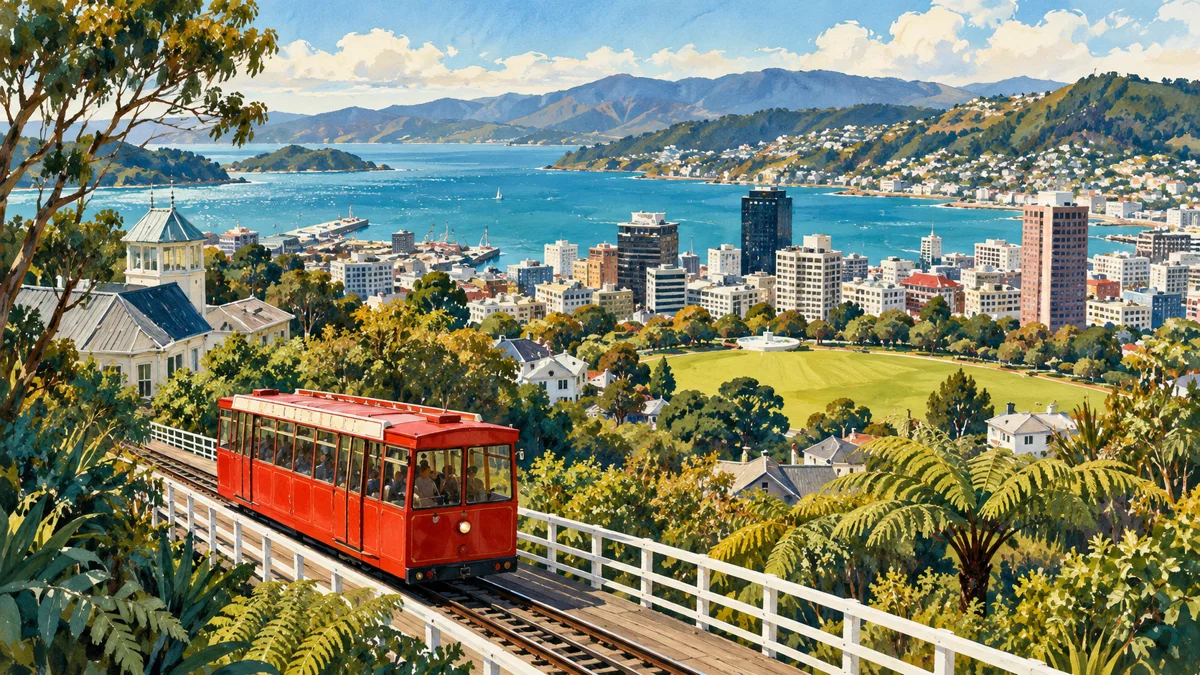
Wellington
The capital of culture, wind and inspiration.
History and Geography
Wellington, also known as Te Whanganui-a-Tara (meaning “Great Harbour of Tara” in Māori), is located at the southern tip of the North Island. It was planned as an important British settlement and became the first major settlement of British immigrants in 1839. By 1865, Wellington had been declared the capital of New Zealand, securing the city a bright future and rapid development.
Geographically, the city is surrounded by steep hills and extends along a narrow coastline. The central part of the city was largely built on land reclaimed from the bay and reclaimed after the massive earthquake of 1855. This natural amphitheatre gives Wellington a special appeal but limits its growth, fostering a dense and vibrant urban life.
Climate: “the windiest” and modern
Wellington has been nicknamed “Windy Wellington .” Its location between Cook Strait and the Remutaka Range often results in strong winds, averaging around 22.6 km/h (14.5 mph), with gusts reaching up to 100 km/h (62 mph). This influences the city’s architecture and lifestyle, creating a distinctive culture of cafés, creative work and life shaped by the weather.
Demographics and character of the inhabitants
According to the 2023 census, Wellington’s population is approximately 201,708. The median age is 34.9 years. Ethnic makeup: 72% European (Pakeha), 9.8% Māori, 20.5% Asian, with some Pacific Islander and other people. Wellington is the second most ethnically diverse city in the country. It is dynamic, youthful, and cosmopolitan.
Culture: art, cinema, coffee and beer
Cultural capital: Wellington is the centre of the nation’s museums, theatres, galleries and festivals, including WOW shows, the International Arts Festival, jazz and food events.
Film and Wellywood: Home to Wētā Workshop and Wētā Digital, the studios behind The Lord of the Rings, Avatar, and more, a studio tour is a popular attraction.
Te Papa Tongarewa: National Museum with interactive exhibits including Gallipoli and the giant squid.
Coffee capital: With over 200 cafes in the city centre, a vibrant barista culture and independent roasters, Wellington makes coffee a way of life.
Craft Beer: Over 30 breweries, beer festivals, Wellington’s recognition as the country’s craft beer capital.
Attractions and green spaces
Cable Car and Botanical Garden: The cable car (since 1902) leads to the 25-hectare garden, with rose gardens, rare plants and paths.
Zealandia: The first urban eco-sanctuary with the return of rare species – tuatara, kaka, kiwi, etc.
Urbanism and the Golden Mile: The Golden Mile links Lambton Quay, Willis Street and Courtenay Place; transport and streetscape changes are part of the city’s ongoing plans.
Beehive: The domed Parliament Building is a symbol of the city and the country.
The present: lively, compact and high-quality
The city ranks among global cities for quality of life, boasting excellent infrastructure, ecology, culture, and access to nature. Sustainable practices are being actively implemented, including Green Wellington, Carbon Zero certification for the Botanic Garden, and ecosystem restoration.
Latest news and features (for tourists)
- Underrated but packed with: Active arts scene, creative atmosphere, cafes and museums.
- Culinary diversity: Cuisines from around the world on Cuba Street range from Burmese to modern Māori (Hiakai).
- Film legacy: Gandalf and the eagle statues have been sent to a museum, Smaug will remain at the airport.
- Local tips: Reuters recommends cafes, hiking trails, Zealandia and WOW exhibitions.
Let’s sum it up
Wellington is:
- A capital that combines political importance with cultural richness.
- A city where the winds create character and the hills and bays make it welcoming.
- The Centre for Film and Creativity is the home of Wētā and Te Papa.
- A place with world-class coffee and beer culture.
- A city where nature is close at hand – from Zealandia to the botanical garden.
- A space for rich cultural, gastronomic and natural recreation.
If you’re looking for an unusual place full of art, history and discovery, Wellington is ready to surprise you.
Illustrations show the character of the places and are not documentary photographs. Opening hours, admission prices and access conditions can change; check the attraction’s official information before booking.
Plan your visit: Wellington
How to fit it into your itinerary
Combine the centre and waterfront with Te Papa. Leave a check-in buffer before a South Island ferry crossing.
How much time to allow
1–2 days; allow roughly 2–3 hours for Te Papa.
Before you travel
Check Te Papa admission for international visitors, selected exhibitions and ferry check-in time.
Official information
- Official website: places, tickets and visitor information
- DOC: access restrictions and alerts
- NZTA: roads and journey times
- Te Papa: visiting and tickets
Times are suggested planning allowances, not guaranteed trip durations. Add driving time, stops and a weather buffer separately. Check current tickets, opening hours and access with the operator; attraction tickets are arranged separately from the driver service.